
oilfield injury lawyer in USA
When the Ground Beneath Your Feet Becomes a Danger Zone
Working in the oil and gas industry is not for the faint-hearted. Every single day, roughnecks, drillers, roustabouts, pipefitters, and dozens of other skilled workers put their bodies on the line to keep the nation’s energy infrastructure running. They work in extreme heat, operate heavy machinery, handle volatile chemicals, and often push through exhaustion on back-to-back twelve-hour shifts.
For many of them, the unthinkable eventually happens.
A blowout. A fall from a drilling platform. A chemical burn. A crushing injury from failed equipment. In one second, a career — and sometimes a life — is changed forever. When that moment comes, having the right oilfield injury lawyer in your corner is not a luxury. It is the single most important decision you will make.
This article breaks down everything you need to know: what an oilfield injury lawyer actually does, what makes these cases so different from regular workplace injury claims, what compensation you might be entitled to, and how to take the right steps from day one.
Understanding the Oilfield: Why It’s One of America’s Most Dangerous Industries
The Bureau of Labor Statistics consistently ranks oil and gas extraction among the top five most hazardous industries in the United States. The fatality rate for oilfield workers is roughly seven times higher than the national average across all other industries. That is not a typo.
The reasons are not hard to understand. Oilfield worksites combine several serious risk factors at once: pressurized equipment, flammable gases and liquids, heavy machinery, sleep-deprived workers, remote locations with limited emergency access, and production pressures that sometimes push safety standards to their limits.
States like Texas, North Dakota, Wyoming, Oklahoma, Louisiana, New Mexico, and West Virginia see the highest concentration of oilfield injuries each year. Offshore operations in the Gulf of Mexico add yet another layer of complexity — not just in terms of physical danger, but also in the legal frameworks that govern injury claims.
What Does an Oilfield Injury Lawyer Actually Do?
Many people assume that hiring a lawyer means showing up at a courthouse and arguing in front of a judge. In reality, the vast majority of oilfield injury cases never see a courtroom. What a skilled oilfield injury attorney does is far more strategic and ongoing than that.
Here is what you can realistically expect when you bring one of these lawyers on your side.
Case Investigation. An experienced oilfield injury attorney will conduct a thorough investigation from the very beginning. This means collecting equipment maintenance logs, reviewing safety inspection records, interviewing coworkers who witnessed the accident, analyzing OSHA incident reports, and often working with independent engineering experts who can speak to what went wrong and why.
Identifying All Liable Parties. This is where oilfield cases get complicated in a way that ordinary workplace accidents do not. On a drilling site, you might have the well operator, a drilling contractor, multiple subcontractors, an equipment manufacturer, and a property owner all operating simultaneously. Each of them might share a portion of responsibility for your injury. A good lawyer identifies every party that can be held accountable — because that directly affects how much compensation is ultimately available to you.
Navigating the Right Legal Claims. Depending on your employment status, your injury, and where it happened, your legal options could include a standard workers’ compensation claim, a third-party personal injury lawsuit, a Jones Act maritime claim if you were working offshore, a product liability claim against an equipment manufacturer, or some combination of all of the above. An oilfield injury lawyer knows how to pursue the most advantageous combination of claims for your specific situation.
Negotiating With Insurance Companies. Oil companies and their contractors carry significant insurance coverage — and their insurers employ teams of adjusters and defense attorneys whose entire job is to minimize what they pay out. Without experienced legal representation, injured workers almost always accept far less than they deserve. Your lawyer levels that playing field.
Taking Cases to Trial When Necessary. When insurance companies refuse to negotiate fairly, a serious oilfield injury attorney is prepared to take the case to a jury. The willingness to go to trial is itself a negotiating tool — companies settle more fairly when they know your lawyer means business.
The Most Common Types of Oilfield Injuries
Not all oilfield injuries are the same, and the nature of your injury will significantly shape your legal strategy. Here are the types of injuries most frequently seen in these cases.
Explosions and Fires. Blowouts, gas leaks, and equipment failures can trigger catastrophic fires and explosions on drilling sites. These incidents often result in severe burns, traumatic brain injuries, and fatalities. The legal complexity of these cases is high, but so is the potential compensation.
Falls from Heights. Derrick workers, floor hands, and maintenance personnel regularly work on platforms, rigs, and structures at significant heights. Falls are one of the leading causes of oilfield fatalities, and they often result from inadequate fall protection, slippery surfaces, or faulty scaffolding.
Struck-By and Caught-Between Incidents. Heavy pipes, drilling equipment, and moving machinery create serious struck-by hazards. Workers have suffered crushed limbs, amputations, and fatal head injuries from this category of accident.
Chemical and Toxic Exposure. Oil and gas operations involve hydrogen sulfide gas, benzene, silica dust from hydraulic fracturing operations, and a range of other toxic substances. Exposure can cause respiratory disease, cancers, neurological damage, and long-term chronic illness. These cases often involve delayed onset of symptoms, which creates unique legal challenges around statutes of limitations.
Vehicle and Transportation Accidents. Workers are frequently transported across remote oilfield locations in company vehicles, and vehicle accidents on job sites are a significant cause of injury. Fatigue is a major contributing factor.
Overexertion and Repetitive Stress. The physically demanding nature of oilfield work leads to a high rate of musculoskeletal injuries — back injuries, torn tendons, herniated discs, and joint damage that can end careers and require years of treatment.
Equipment Malfunctions. Defective or poorly maintained drilling equipment, pressure valves, blowout preventers, and safety systems have contributed to numerous severe injuries and deaths. In these cases, the equipment manufacturer may be held liable independent of the employer.
Workers’ Compensation vs. Personal Injury Lawsuits: What’s the Difference?
This is one of the most important distinctions in any oilfield injury case, and it is one that most injured workers do not fully understand at the outset.
Workers’ compensation is a no-fault insurance system. In exchange for quick, guaranteed benefits regardless of who was at fault, employees typically give up the right to sue their direct employer for pain and suffering. Workers’ comp covers medical expenses and a portion of lost wages — but it does not compensate you for the full extent of your suffering, future lost earning capacity, or non-economic damages like the impact on your quality of life.
A personal injury lawsuit, on the other hand, opens the door to much broader compensation. Here is the critical nuance: while you generally cannot sue your direct employer outside of workers’ comp (with some exceptions), you can absolutely sue third parties — contractors, subcontractors, equipment manufacturers, property owners — whose negligence contributed to your injury. On a busy oilfield site with multiple parties, this distinction can be worth hundreds of thousands, or even millions, of dollars.
A skilled oilfield injury lawyer will evaluate your case to determine whether you have viable third-party claims and will pursue them aggressively alongside any workers’ comp benefits you are entitled to.
Offshore and Maritime Oilfield Injuries: A Different Legal World
If you were injured while working on an offshore oil platform, a drilling vessel, a supply boat, or any other watercraft or maritime structure, your case falls under a completely different and specialized area of federal law.
The Jones Act is the primary federal statute that protects seamen who are injured at sea. Under the Jones Act, qualifying maritime workers can sue their employer directly for negligence — a right that onshore workers covered by workers’ comp generally do not have. This is a significant distinction, because it means a much broader range of recoverable damages.
The Outer Continental Shelf Lands Act (OCSLA) extends federal jurisdiction and certain protections to workers on fixed offshore platforms on the outer continental shelf. The Longshore and Harbor Workers’ Compensation Act (LHWCA) provides benefits for certain dock workers and harbor laborers.
Offshore injury cases involving the Jones Act and related maritime law are highly specialized. If you were injured on or near water in connection with your oilfield work, it is absolutely critical that you work with a lawyer who has specific experience in maritime personal injury law, not just general workers’ compensation.

What Compensation Can You Recover?
The types and amounts of compensation available depend on your specific circumstances, but here is a comprehensive picture of what may be on the table.
Medical expenses are typically the baseline — both what you have already spent and the full projected cost of your future medical care, including surgeries, rehabilitation, specialist visits, and long-term medication.
Lost wages cover the income you have missed while recovering. But in serious injury cases, the bigger number is often future lost earning capacity — what you would have earned over the rest of your working life, accounting for raises, promotions, and career trajectory that your injury has now cut short.
Pain and suffering encompasses the physical pain, emotional distress, anxiety, depression, and loss of enjoyment of life that flows from your injury. These damages are non-economic but very real, and in severe cases they can exceed the economic damages.
In cases involving gross negligence or willful disregard for worker safety — for example, when a company continues operating unsafe equipment despite clear warnings — punitive damages may be available. These are designed not to compensate you but to punish the wrongdoer and deter similar conduct.
Wrongful death damages are available to surviving family members when an oilfield accident results in a fatality. These include funeral costs, loss of financial support, and loss of the companionship and guidance the deceased would have provided.
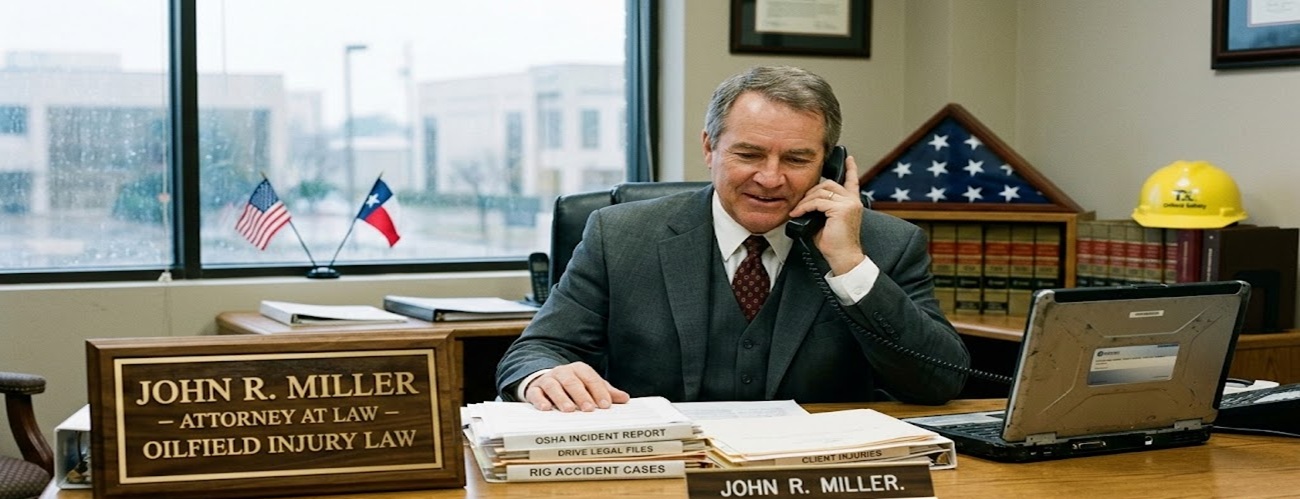
How to Choose the Right Oilfield Injury Lawyer
Not every personal injury attorney has the knowledge, resources, or track record to handle an oilfield injury case effectively. Here is what to look for.
Specific experience matters enormously. You want a lawyer or firm that has handled oilfield, oil rig, or energy sector injury cases before — not just general slip-and-fall or car accident cases. These cases involve specialized knowledge of industry safety regulations, OSHA standards specific to oil and gas, drilling operations, and sometimes maritime law.
Resources are just as important as experience. Building a strong oilfield injury case requires investing in expert witnesses — engineers, safety consultants, medical experts, economists. A solo practitioner with limited resources may not be able to sustain the kind of litigation that forces a large oil company to pay what a case is truly worth.
Track record with serious cases. Ask about results. Not promises — actual case results. Verdicts, settlements, and the types of injuries the firm has successfully handled.
Contingency fee arrangements. Most reputable oilfield injury lawyers take cases on a contingency basis, meaning you pay nothing unless and until they recover money for you. This aligns their interests with yours and means you have access to quality representation without any upfront cost.
Steps to Take After an Oilfield Injury
The actions you take in the days immediately following an oilfield injury can dramatically affect your case. Here is a straightforward guide.
Seek medical attention immediately, even if you feel like your injuries are minor. Some serious conditions — internal bleeding, traumatic brain injuries, chemical exposure effects — do not manifest fully right away. Getting evaluated creates an important medical record tied to the date of the accident.
Report the injury to your supervisor or employer as soon as possible. Most states have strict deadlines for reporting workplace injuries, and missing them can jeopardize your workers’ compensation claim.
Document everything you can. Take photos of the accident scene, your injuries, any equipment involved, and any visible safety hazards. Write down your own account of what happened while it is fresh.
Do not give recorded statements to insurance company adjusters without your lawyer present. They are trained to ask questions in ways that can be used to reduce or deny your claim.
Preserve any evidence you can access. If there is a defective piece of equipment involved, make sure your lawyer is notified immediately so that preservation orders can be sought before evidence is lost or destroyed.
Contact an oilfield injury lawyer as soon as possible. Statutes of limitations — the legal deadlines for filing claims — vary by state and by type of claim, but they can be as short as one to two years. Waiting too long can permanently forfeit your right to compensation.
Frequently Asked Questions About Oilfield Injury Claims
How long do I have to file an oilfield injury lawsuit in the USA?
The statute of limitations varies depending on your state and the type of claim. In most states, personal injury lawsuits must be filed within two to three years of the accident date. Jones Act maritime claims generally have a three-year window. Workers’ compensation claims often have much shorter reporting deadlines — sometimes 30 to 90 days. The safest approach is to contact an attorney as soon as possible after your injury.
Can I still file a lawsuit if my employer says the accident was my fault?
Yes, in most cases. Most states follow comparative negligence rules, meaning that even if you were partially at fault, you can still recover compensation reduced by your percentage of fault. An attorney can evaluate the facts and identify whether other parties — third-party contractors, equipment manufacturers — bear significant responsibility regardless of your own actions.
What if I am an independent contractor rather than an employee?
This is a complex area that depends heavily on how you are classified and the specific facts of your engagement. Independent contractors are generally not covered by workers’ compensation, but they may have stronger grounds for direct negligence lawsuits. The legal analysis here is nuanced, and an experienced oilfield injury lawyer can assess your options.
What does it cost to hire an oilfield injury lawyer?
Most oilfield injury attorneys work on a contingency fee basis, meaning their fee is a percentage of whatever they recover for you — typically 33% to 40%. If they recover nothing, you owe nothing. There are usually no upfront costs.
Can family members file a claim if a loved one was killed in an oilfield accident?
Yes. Surviving spouses, children, and dependents may be able to bring a wrongful death lawsuit. The available damages include financial losses, funeral and burial costs, and in some states, compensation for the grief and loss suffered by surviving family members.
What if OSHA already investigated my accident?
An OSHA investigation is separate from your civil legal claim. OSHA can cite and fine employers for safety violations, but it does not compensate injured workers directly. However, an OSHA investigation report can be valuable evidence in your personal injury case and may help establish negligence on the part of the employer or site operator.
How long does an oilfield injury case take to resolve?
There is no single answer. Cases with clear liability and cooperative insurance companies can sometimes settle within several months. Complex cases involving multiple parties, serious injuries, or contested liability can take two to four years or longer. Your attorney can give you a realistic timeline based on the specific facts of your situation.
| Law Firm | Website | Phone Number | Coverage Area | Specialty |
|---|---|---|---|---|
| Zehl & Associates (Undefeated) | www.zehllaw.com | 1-888-603-3636 | Texas, North Dakota, Louisiana, New Mexico, Nationwide | #1 Largest oilfield settlements in US history, burn injuries, blowouts |
| Arnold & Itkin LLP | www.arnolditkin.com | (888) 346-5024 | Nationwide (Gulf Coast, offshore) | Maritime law, Jones Act, Deepwater Horizon cases, $20 billion+ recovered |
| Hilliard Law | www.hilliard-law.com | (866) 927-3420 | Texas, Nationwide | Oil field accidents, explosions, equipment failures |
| Kemmy Law Firm | www.kemmylawfirm.com | (830) 264-6297 or 210-750-1019 | Texas, North Dakota (Bismarck) | Family-run firm, board certified, former prosecutors |
Texas (Major Oilfield Region)
| Law Firm | Website | Phone Number | Location | Notable Wins |
|---|---|---|---|---|
| Zehl & Associates – Midland/Odessa | www.zehllaw.com/oilfield-accident-lawyer/midland | 432-220-0000 or 1-888-603-3636 | Midland, TX (Permian Basin) | #1 Largest oilfield settlement in US history, $32M truck accident settlement |
| Chad Jones Law | chadjoneslaw.com | 866-462-5224 | College Station, Lubbock, Midland, Temple | Free case evaluation, multiple Texas offices |
| Trey Barton Law | www.treybartonlaw.com | 832-916-2526 | Houston, TX | Modern litigation strategies, millions recovered |
| Howry Breen & Herman | www.howrybreen.com | (512) 430-4844 | Austin, TX | Oilfield accidents, equipment failures |
| Giunta Law (Frank Giunta) | frankgiunta.com | 800-515-7200 | Texas | Millions won for oilfield workers |
| Bob Schuster | www.bobschuster.com | Contact via website | Texas, Utah, North Dakota, Wyoming, Oklahoma | Multi-state oilfield representation |
North Dakota (Bakken Oilfield)
| Law Firm | Website | Phone Number | Location | Specialty |
|---|---|---|---|---|
| Larson Law | ndakotalaw.com | 701-484-4878 | Minot, Bismarck, Fargo | Bakken oilfield injuries, fracking accidents, wrongful death |
| Zehl & Associates – North Dakota | www.zehllaw.com/north-dakota | 1-888-603-3636 | North Dakota | Undefeated, $62M recovery for oilfield worker |
| Kemmy Law Firm – Bismarck | www.kemmylawfirm.com/north-dakota | (830) 264-6297 | Bismarck, ND | Family team approach, living expenses assistance |
Oklahoma
| Law Firm | Website | Phone Number | Location |
|---|---|---|---|
| Abel Law Firm | www.abellawfirm.com | (405) 239-7046 | Oklahoma City |
Offshore & Maritime (Jones Act Specialists)
| Law Firm | Website | Phone Number | Specialty | Notable Results |
|---|---|---|---|---|
| BoatLaw LLP (formerly Anderson Carey) | www.boatlaw.com | 1-800-BOATLAW (1-800-262-8529) | Jones Act, maritime law, offshore injuries | $10M harbor worker judgment, $8M wrongful death settlement |
| Doyle Dennis Avery LLP | offshoreinjurytrialattorney.com | (713) 571-1146 or (888) 571-1001 | Maritime law, Jones Act, offshore injuries | Houston & Galveston offices |
| Maintenance and Cure | maintenanceandcure.com | 1-800-836-5830 | Houston maritime injury, Jones Act | 24/7 availability |
| Stewart Tilghman Fox Bianchi & Cain | www.stfblaw.com | (305) 770-6335 | Florida maritime law, Jones Act | Miami-based, nationwide |
| Naylor Law | naylorlaw.com | (310) 514-1200 | Maritime attorneys, cruise ship injuries | California-based |
What to Look For in an Oilfield Injury Lawyer
✅ Free initial consultation
✅ Board certification in personal injury or oilfield law
✅ Trial experience (willingness to go to court)
✅ Resources for expert witnesses and investigation
✅ 24/7 availability for emergencies
✅ Living expenses assistance while case is pending (offered by top firms like Zehl & Kemmy)
Important Legal Deadlines
| Claim Type | Typical Deadline | Notes |
|---|---|---|
| Workers’ Compensation | 30-90 days to report | Varies by state |
| Personal Injury Lawsuit | 2-3 years from accident | Varies by state |
| Jones Act/Maritime Claims | 3 years | Federal statute |
| Wrongful Death | 1-3 years | Varies by state |
For More Update Visit Home Click Here
Disclaimer
The information provided in this article is intended for general educational purposes only and does not constitute legal advice. Every oilfield injury case is unique, and the laws governing these claims vary significantly from state to state and depending on the specific facts and circumstances involved. Reading this article does not create an attorney-client relationship. If you or a loved one has been injured in an oilfield or oil rig accident in the United States, you should consult with a licensed personal injury or workers’ compensation attorney in your jurisdiction as soon as possible. Do not rely solely on this article when making legal decisions.