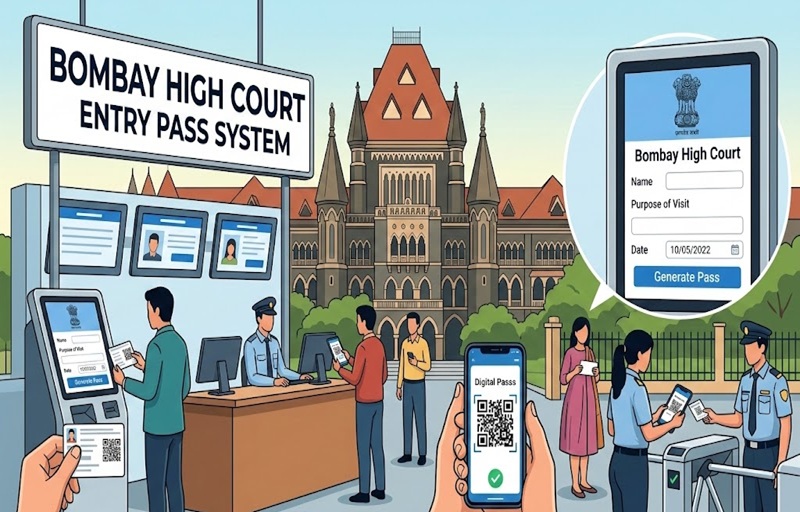
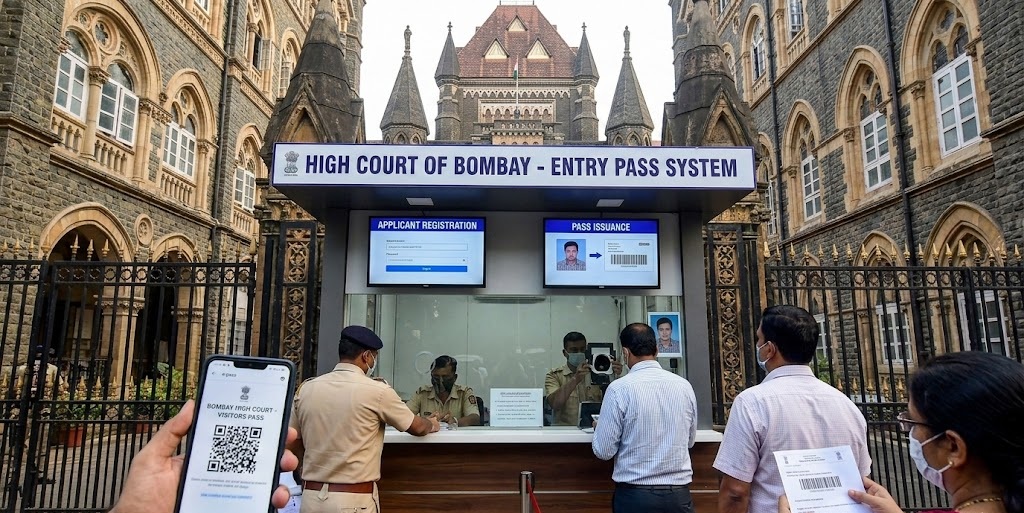
The Bombay High Court, one of India’s oldest and most prestigious judicial institutions, serves as the highest court of judicature for the states of Maharashtra and Goa, with its principal seat in Mumbai and benches at Nagpur and Aurangabad. Established in 1862 under the Indian High Courts Act, this institution has witnessed the evolution of Indian jurisprudence while adapting its administrative processes to contemporary requirements. Among these adaptations, the entry pass system for accessing the court premises represents a critical interface between judicial administration and public access, balancing the imperative of open justice with essential security protocols.
Unlike some sister High Courts that have implemented fully automated online e-pass portals, the Bombay High Court maintains a hybrid approach that combines digital information systems with manual verification and pass issuance procedures. This system reflects the unique architectural and operational characteristics of the Bombay High Court, which occupies heritage structures in South Mumbai’s Fort area while managing modern security challenges. Understanding this entry pass system requires familiarity with its historical context, current operational mechanics, and the specific pathways available to different categories of visitors.
The significance of the Bombay High Court entry pass system extends beyond mere administrative convenience. For the thousands of litigants, advocates, law students, and officials who access the court daily, the pass represents the gateway to justice delivery. The system’s design affects access to legal remedies, the efficiency of court operations, and the experience of justice administration. As security concerns have intensified across Indian judicial institutions, particularly following the nationwide deployment of the Central Industrial Security Force (CISF) to major High Courts, entry procedures have assumed heightened importance in court administration.
Historical Context and Administrative Architecture
The Heritage Infrastructure Challenge
The Bombay High Court operates from a magnificent Gothic Revival structure designed by Colonel James Augustus Fuller and completed in 1878. This heritage building, with its intricate stonework, pointed arches, and expansive corridors, presents unique challenges for modern security management. Unlike contemporary purpose-built courthouses, the Bombay High Court’s historic fabric limits the installation of modern security infrastructure such as turnstiles, metal detectors at all entry points, and surveillance systems without compromising architectural integrity.
This physical context has influenced the development of the entry pass system. The court maintains multiple entry points corresponding to different functional zones—the main public entrance, advocate entrances, and service entries—each with distinct pass requirements and verification protocols. The heritage architecture necessitates manual security screening procedures that cannot be fully automated, preserving human judgment in access control decisions.
The court’s expansion to benches at Nagpur (established in 1936) and Aurangabad (established in 1995) has created additional administrative complexity, with each bench maintaining adapted entry procedures suited to local conditions while adhering to common security standards set by the principal seat. Visitors to these benches must navigate location-specific pass requirements while the principal seat in Mumbai manages the highest volume of applications.
The CISF Security Integration
The deployment of CISF protection to the Bombay High Court, following the pattern established at other major High Courts, fundamentally altered the entry pass landscape. This central armed police force, trained in securing critical infrastructure, introduced professional security protocols that necessitated more rigorous visitor verification and documentation. The CISF presence requires that all entry passes serve not merely administrative convenience but active security functions, enabling background verification and threat assessment.
The integration of CISF protocols with court administrative procedures created a bifurcated system where court officials manage pass applications while security personnel execute physical verification. This division of labor ensures that security professionals focus on threat detection while court staff handle the administrative aspects of visitor management. However, it also introduces potential friction points where administrative and security requirements intersect, occasionally resulting in processing delays or documentation requests that surprise unprepared visitors.
Digital Transition and Current Status
The Bombay High Court has implemented significant digitalization in other administrative domains—case filing, cause list publication, judgment retrieval, and fee payment all operate through sophisticated online platforms accessible through the official website
However, the entry pass system has not yet transitioned to fully automated online generation comparable to the Delhi High Court’s eVisitor system or the Allahabad High Court’s eGate Pass portal
This partial digitalization reflects practical considerations rather than technological limitations. The Bombay High Court’s high visitor volume, combined with the need for physical document verification and the complexities of heritage infrastructure, has sustained a system that requires personal presence for pass collection. Visitors must typically apply through advocates or approach court administrative offices directly, with passes issued after verification rather than generated instantly through web portals.
Categories of Entry and Corresponding Pass Pathways
Litigant and General Public Access
For litigants seeking to attend their own case hearings, the Bombay High Court entry pass system operates through advocate-mediated channels. Litigants do not typically apply for passes independently but are sponsored by the advocates representing them. The process requires the engaging advocate to request visitor passes from court administrative offices, providing details of the case number, court number, hearing date, and visitor particulars.
This advocate-mediated system serves multiple functions. It ensures that visitors have legitimate business in the court, provides a professional contact point for any issues arising during the visit, and integrates visitor management with the existing advocate-court relationship. Litigants must coordinate with their lawyers well in advance of hearing dates to ensure pass availability, as same-day requests may face administrative delays.
General members of the public seeking to observe court proceedings face more restrictive access. Unlike some jurisdictions that permit open observation of most proceedings, the Bombay High Court limits general public access based on space constraints and security considerations. Individuals seeking observation access for educational or research purposes must typically demonstrate legitimate academic or professional interest, often requiring institutional endorsement or letters of introduction.
Advocate and Registered Clerk Access
Practicing advocates registered with the Bombay High Court Bar Association enjoy streamlined access through advocate identity cards and registered clerk arrangements. Senior advocates and practicing advocates with established practice may obtain long-term entry cards that exempt them from daily pass requirements for routine court access. These professional passes are issued through the Bar Association in coordination with court administration, requiring verification of enrollment status and good standing.
Registered clerks employed by advocates may obtain designated passes that facilitate their essential role in court operations—carrying files, obtaining certified copies, and managing case documentation. The Bombay High Court maintains specific forms for clerk registration, including specimen forms available through the General Department section of the website
These forms require advocate sponsorship and periodic renewal to maintain active status.
The distinction between advocate passes and visitor passes reflects the court’s recognition of professional presence versus occasional attendance. While advocates and their staff require frictionless daily access to serve their clients effectively, visitors with specific case-related purposes undergo more controlled entry procedures appropriate to their intermittent presence.
Law Student and Academic Access
Law students seeking to observe proceedings or undertake internships at the Bombay High Court navigate a specialized pathway that balances educational objectives with security requirements. Unlike the Madras High Court, which offers specific monthly pass forms for law students
, or the Allahabad High Court, which operates a structured internship program with online applications
, the Bombay High Court student access system relies on institutional coordination and personal application.
Students from recognized law colleges typically apply through their institutional placement cells or faculty coordinators, who establish relationships with court administration to facilitate group visits or individual observation schedules. For extended internships under specific judges, students require sponsorship from the concerned judge’s chamber or registry section, with passes issued for the internship duration subject to security verification.
The Bombay High Court does not currently operate a centralized online portal for student pass applications comparable to the Supreme Court’s SuSwagatam system
or the Delhi High Court’s eVisitor portal
Students must therefore engage directly with court administrative offices, typically through written application supported by institutional identification, bonafide certificates, and letters of introduction from faculty members.
Government Official and Professional Access
Government officials attending court for official purposes—police officers, revenue officials, public prosecutors, and administrative officers—access the court through departmental authorization channels. These visitors typically carry official identification and letters of authority from their departments, with entry coordinated through specific court sections relevant to their official business.
Corporate officials, bank representatives, and other professionals with case-related business follow advocate-mediated pathways similar to litigants, with their presence sponsored by the legal representatives handling their matters. This ensures that professional visitors have established connections within the court system and legitimate purposes for their attendance.
The Application Process: Step-by-Step Procedures
Pre-Application Preparation
Successful navigation of the Bombay High Court entry pass system requires thorough preparation before approaching administrative offices. Visitors must assemble documentation that establishes identity, institutional affiliation or professional status, and the specific purpose of court access.
Essential documentation includes:
Government-issued photo identification: Aadhaar card, Permanent Account Number (PAN) card, passport, driving license, or voter identification card. Original documents are required for verification, with photocopies typically retained for administrative records.
Case-related documentation: For litigants, case numbers, court details, and hearing dates must be confirmed with engaging advocates before pass application. The cause list, available through the Bombay High Court website’s causelist section, provides essential information about court scheduling
Institutional identification: For students, current student identity cards and bonafide certificates from recognized law colleges or universities. These documents must indicate active enrollment status and the specific program of study.
Professional credentials: For advocates, enrollment certificates from the Bar Council of Maharashtra and Goa; for government officials, official identity cards and authorization letters from departmental heads.
Photographs: Recent passport-sized color photographs for affixing to pass applications, typically requiring standard specifications regarding size, background, and clarity.
Visitors should also prepare information about the specific nature of their court business—whether attending a particular hearing, meeting with court officials, conducting research, or observing proceedings. This information determines the appropriate administrative office for application submission and the category of pass issued.
Administrative Office Identification
The Bombay High Court maintains distinct administrative sections handling different categories of passes. Visitors must identify the correct office to avoid processing delays:
General Visitor Passes: The Main Registry or Gate Pass Counter at the principal public entrance typically handles requests from litigants and general visitors. These offices operate during court working hours, generally 10:30 AM to 5:00 PM on working days.
Advocate and Clerk Matters: The Advocate Registration Section and Bar Association coordination office manage professional passes and registered clerk applications. These offices maintain specific forms and procedures distinct from general visitor processing.
Internship and Research Applications: The Registry sections or specific judges’ chambers handle student internship placements and research access. These applications often require prior arrangement with judicial officers or court officials responsible for academic engagement.
Nagpur and Aurangabad Benches: Each bench maintains independent administrative offices for pass issuance, with procedures adapted to local operational conditions. Visitors to these benches must contact the respective bench registries rather than the Mumbai principal seat.
The Bombay High Court website provides contact details for various administrative sections, though specific pass-related information may require direct inquiry
. Telephone directories available through the website list extension numbers for different departments, facilitating preliminary inquiries about required documentation and application procedures
Application Submission and Processing
The application submission process at the Bombay High Court remains predominantly physical, requiring personal presence at administrative offices. Unlike fully digitalized systems where applications are submitted remotely and passes generated electronically, the Bombay High Court system involves face-to-face interaction with administrative staff.
The submission procedure typically involves:
Form completion: Obtaining and completing the appropriate application form from the relevant administrative office. Forms vary by visitor category and may require information about personal details, visit purpose, case particulars, and sponsoring advocate details.
Document verification: Presenting original documents for visual verification by administrative staff, who may retain photocopies for record-keeping. Staff examine identification validity, institutional enrollment status, and the legitimacy of stated purposes.
Photograph capture: Many visitor categories require on-site photograph capture for security identification, ensuring that passes bear current images rather than potentially outdated submitted photographs.
Security screening: For certain pass categories, particularly extended-duration passes or access to sensitive areas, applications may undergo security review processes that extend processing timelines.
Pass issuance: Upon verification completion, passes are issued with specific validity periods, authorized areas of access, and conditions of use clearly indicated.
Processing timelines vary significantly by category. Same-day passes for immediate hearing attendance may be processed within hours if documentation is complete and advocates have pre-coordinated with registry staff. Monthly or extended-duration passes require more comprehensive verification, potentially taking several working days for security clearance and administrative approval.
Bombay High Court Entry Pass System
Collection and Entry Procedures
Once issued, passes must be collected in person from designated counters, with recipients typically required to sign acknowledgment registers. The pass serves as both entry authorization and identification document within court premises.
Entry procedures at the Bombay High Court involve multiple verification stages:
Initial gate verification: CISF personnel or court security staff examine passes and identification documents at perimeter entry points, verifying visual identity against pass photographs and checking pass validity dates.
Baggage and personal screening: All entrants undergo security screening including bag checks and metal detection, with restrictions on electronic devices, cameras, and recording equipment in certain areas.
Courtroom access verification: For entry to specific courtrooms, additional verification may confirm that the visitor has legitimate business in that particular court, with ushers or court staff checking case-related documentation.
Exit procedures: Some pass categories require exit stamping or return of temporary passes upon departure, ensuring accountability for all visitors within the premises.
Visitors must carry their passes throughout their court visit and present them upon request by security personnel or court officials. Failure to produce valid passes when required may result in removal from premises or other administrative actions.
Comparative Context: Bombay High Court in National Perspective
Digitalization Divergence
The Bombay High Court’s entry pass system diverges significantly from the digitalization trajectories of other major High Courts, creating a comparative landscape of varying administrative modernization. The Delhi High Court operates a sophisticated eVisitor portal (evisitordhc.gov.in) that enables online registration, advocate verification through SMS/email, and status tracking with print capabilities
. The Allahabad High Court similarly maintains an eGate Pass system with online application and approval workflows
. The Patna High Court offers online visitor pass applications through government service portals
This divergence reflects varying institutional choices regarding the balance between administrative efficiency and security control. While online systems offer convenience and reduce physical crowding at administrative offices, they may limit the face-to-face verification that heritage court environments and high-security protocols demand. The Bombay High Court’s sustained manual processing may preserve elements of human judgment in access decisions that automated systems cannot replicate.
Security Standardization
Despite procedural variations, the Bombay High Court aligns with national security standards established for High Court protection. The CISF deployment, following patterns established at the Madras High Court in 2016 and other major High Courts, ensures that entry control meets central security agency specifications
. This standardization means that while pass issuance procedures may vary, physical entry verification, prohibited items screening, and emergency response protocols remain consistent across institutions.
The security integration affects pass design and functionality. Bombay High Court passes must contain sufficient identifying information for CISF verification, including photographs, validity dates, authorized areas, and unique identification numbers that enable tracking and accountability. Pass formats may incorporate security features such as holographic seals, watermarks, or specific color coding that distinguish valid passes from potential forgeries.
Future Digitalization Prospects
The Bombay High Court’s extensive digitalization in other domains—e-filing, virtual hearings, e-library services, and case management systems—suggests capacity for eventual entry pass system modernization
.The court’s implementation of video conferencing rules and virtual hearing infrastructure during the COVID-19 pandemic demonstrated adaptability to technological solutions
Potential future developments might include:
Online pre-registration: Allowing visitors to submit details and upload documents remotely before physical verification, reducing processing time at administrative offices.
QR code integration: Incorporating machine-readable codes into passes for faster security verification and real-time tracking.
Mobile application development: Following the Chhattisgarh High Court’s model of e-Gate Pass mobile apps for convenient application and pass management
Interoperability with Supreme Court systems: Aligning with the SuSwagatam portal architecture to enable seamless visitor management across judicial hierarchy levels
However, any digitalization must accommodate the heritage infrastructure constraints and the high visitor volumes that characterize the Bombay High Court’s operations. Technological solutions that function effectively in newer facilities may require adaptation for the Mumbai principal seat’s historic environment.
Practical Challenges and Strategic Navigation
Common Application Difficulties
Visitors to the Bombay High Court frequently encounter practical challenges that complicate entry pass acquisition. Understanding these difficulties enables strategic planning to mitigate their impact.
Documentation completeness represents the most frequent obstacle. Administrative offices reject incomplete applications or those with expired identification, requiring applicants to return with corrected documentation. This proves particularly problematic for out-of-town litigants who may have traveled specifically for court attendance and lack immediate access to alternative documents.
Advocate coordination challenges affect litigant access significantly. Advocates managing multiple cases may delay pass sponsorship requests, or litigants may struggle to contact their lawyers promptly when administrative offices request additional information. The advocate-mediated system creates dependency on legal representatives that can frustrate visitors unfamiliar with court procedures.
Processing delays during high-volume periods—such as when major cases are scheduled or during court vacation periods when staffing is reduced—can result in applicants not receiving passes within required timeframes. The lack of online tracking systems compounds this difficulty, as applicants cannot monitor application status remotely.
Location confusion affects visitors to the Nagpur and Aurangabad benches, who may mistakenly approach Mumbai administrative offices or fail to understand bench-specific procedures. The Bombay High Court’s decentralized structure requires clear understanding of which bench handles specific matters.
Strategic Recommendations
Successful navigation of the Bombay High Court entry pass system requires strategic preparation and relationship management:
Advance planning is essential. Litigants should confirm hearing dates through the online cause list system and initiate pass requests through their advocates at least 3-5 days before scheduled appearances
. This buffer accommodates documentation corrections, advocate scheduling, and administrative processing without last-minute pressure.
Documentation maintenance involves keeping current, valid identification and maintaining digital copies of essential documents that can be reproduced if originals are unavailable. Students should ensure their institutional identification cards are renewed promptly and bonafide certificates are recently issued.
Advocate relationship management requires clear communication about pass needs and confirmation that sponsorship requests have been submitted. Litigants should obtain acknowledgment of pass requests from their lawyers and confirm collection procedures before the hearing date.
Alternative pathways should be explored when standard procedures face obstacles. For urgent matters, direct application to court registry offices with complete documentation may expedite processing. For academic access, faculty coordinators with established court relationships may facilitate introductions that streamline internship arrangements.
Bench-specific preparation is crucial for matters outside Mumbai. Contacting the specific bench registry directly, confirming local procedures, and allowing additional time for decentralized processing ensures smoother access to Nagpur and Aurangabad facilities.
Institutional Stakeholders and Contact Architecture
Administrative Offices and Functions
The Bombay High Court entry pass system involves multiple administrative stakeholders, each with specific functions and contact points:
The Principal Registry coordinates overall visitor management policy and handles high-level access authorizations. Located at the Mumbai principal seat, this office sets procedural standards for bench registries and manages advocate registration matters.
The Security Office, in coordination with CISF deployment, oversees physical access control, pass format security features, and threat assessment protocols. This office works closely with registry functions to ensure that issued passes meet security verification requirements.
The Bar Association Liaison Office manages advocate-related access, including professional pass issuance, registered clerk applications, and coordination with the Bombay High Court Bar Association regarding member access privileges.
Bench Registries at Nagpur and Aurangabad operate with delegated authority for local pass issuance, maintaining adapted procedures while adhering to principal seat security standards. These offices handle the majority of access requests for matters within their territorial jurisdiction.
Communication Channels
The Bombay High Court provides multiple communication channels for entry pass inquiries, though specific pass-related information may require direct contact rather than website consultation:
Telephone inquiries: The court maintains extensive telephone directories with departmental extensions, enabling direct contact with specific administrative sections
. General inquiries may be directed to the main registry number, while specialized matters require contact with specific departments.
Website information: The official website (bombayhighcourt.nic.in or bombayhighcourt.gov.in) provides general administrative information, contact directories, and downloadable forms, though it does not currently offer online pass application functionality
.
Physical visits: For complex cases or when telephone/online information proves insufficient, personal visits to administrative offices allow direct consultation with staff. Visitors should prepare specific questions and relevant documentation for such consultations.
Advocate facilitation: Registered advocates often serve as informal communication channels, leveraging their regular court presence to obtain information about procedural requirements and processing timelines.
In view of the above facts, Final Conclusion.
The Bombay High Court entry pass system represents a distinctive approach to judicial access management that balances heritage preservation, security imperatives, and administrative functionality. Unlike fully digitalized systems at some sister High Courts, the Bombay High Court maintains manual processing procedures that reflect its unique operational environment and visitor demographics.
For litigants, advocates, students, and officials seeking access, understanding this system’s specific requirements—advocate mediation for litigants, institutional coordination for students, and direct administrative engagement for other categories—enables effective navigation and successful court entry. While the system may lack the convenience of online portals, its structured procedures ensure thorough verification and security control appropriate to a premier judicial institution.
As the Bombay High Court continues its broader digitalization initiatives, the entry pass system may eventually incorporate online elements that streamline application procedures while preserving essential verification functions. Until such developments, visitors must engage with the system as it exists—through personal presence, documented preparation, and strategic relationship management with the advocates and officials who serve as gatekeepers to this historic institution.
The entry pass, in its physical form issued by Bombay High Court administrative offices, carries significance beyond mere access authorization. It represents the tangible interface between the Indian public and one of its most venerable judicial institutions, embodying the court’s commitment to open justice within necessary security constraints. Understanding and successfully navigating the pass acquisition process thus constitutes an essential skill for effective engagement with the Bombay High Court and the justice system it administers.
Bombay High Court Entry Pass System
Frequently Asked Questions (FAQ)
Q: Does the Bombay High Court have an online e-pass system like Delhi or Allahabad High Courts?
A: No, the Bombay High Court does not currently operate a fully automated online e-pass portal. While the court has digitalized many administrative functions including e-filing and case management, entry passes are issued through manual application procedures at administrative offices. Visitors must typically apply in person or through advocate sponsorship rather than generating passes online
Q: How do I get an entry pass as a litigant for my case hearing?
A: Litigants should coordinate with their engaging advocate, who will request visitor passes from court administrative offices. Provide your advocate with your full name, government ID details, and confirmed hearing date well in advance (3-5 days recommended). The advocate will collect the pass on your behalf or guide you to the appropriate registry office for collection. Carry original identification documents when collecting the pass and entering the court premises.
Q: What documents do I need to carry for getting a visitor pass?
A: Essential documents include: (1) original government-issued photo identification (Aadhaar, PAN, passport, driving license, or voter ID); (2) case-related information including case number, court number, and hearing date; (3) for students, current institutional ID and bonafide certificate; (4) recent passport-sized photographs; and (5) any authorization letters or advocate contact details. Original documents are required for verification—photocopies alone are insufficient.
Q: Can law students get monthly passes for regular court observation like at Madras High Court?
A: The Bombay High Court does not offer a standardized monthly pass system specifically for law students comparable to the Madras High Court monthly pass form Student access is typically arranged through institutional coordination, specific internship placements under judges, or daily visitor passes for observation purposes. Students should contact their law college placement cells or approach court registry offices directly with institutional recommendations for academic access arrangements.
Q: What are the working hours for pass application and collection?
A: Administrative offices handling entry passes generally operate during court working hours, approximately 10:30 AM to 5:00 PM on working days (Monday through Friday, excluding court holidays). Processing times vary by pass category—same-day processing may be possible for urgent hearing attendance with complete documentation, while extended-duration passes require several working days. Apply well in advance of your intended visit to accommodate processing delays.
Q: Is there a different process for the Nagpur and Aurangabad benches?
A: Yes, the Nagpur and Aurangabad benches maintain independent administrative offices for pass issuance with procedures adapted to local conditions. Visitors to these benches must contact the respective bench registries directly rather than the Mumbai principal seat. Allow additional time for processing at bench locations, and confirm specific requirements by contacting the bench administration before your visit.
Q: What security procedures apply after I get my entry pass?
A: Entry to Bombay High Court premises involves multiple verification stages: (1) initial gate verification where CISF/security staff check passes and original ID; (2) baggage and personal screening including metal detection; (3) potential additional verification for specific courtroom access; and (4) exit procedures that may include pass return or exit stamping. Prohibited items typically include cameras, recording devices, and certain electronic equipment. Dress in formal attire and maintain decorum throughout your visit.
Q: Can I get a same-day pass if I have an urgent hearing?
A: Same-day pass issuance is possible but not guaranteed. Urgent processing requires complete documentation, advocate coordination with registry staff, and availability of administrative personnel. To maximize chances of same-day issuance, arrive early at administrative offices (ideally before 11:00 AM), ensure all documents are in order, and have your advocate contact registry staff in advance. However, always aim to apply 3-5 days before hearings to avoid last-minute complications.
Q: What should I do if my advocate is unavailable to sponsor my pass?
A: If advocate sponsorship is unavailable, you may attempt direct application to court registry offices with complete case documentation, hearing notices, and original identification. Explain your situation to administrative staff and request guidance on alternative verification procedures. Some categories of visitors may be accommodated through direct registry application, though this depends on specific circumstances and staff discretion. Consider contacting the court’s Public Information or grievance sections if you face undue obstacles.
Q: Are there any fees for obtaining entry passes?
A: Standard visitor passes for litigants and general observation are typically issued without fees as part of court administrative services. However, specific categories such as registered clerk applications or professional advocate card renewals may involve nominal processing fees. Verify current fee structures at the specific administrative office where you apply, as policies may be subject to change.
Important Note: Unlike Delhi High Court or Allahabad High Court, the Bombay High Court does NOT have a fully automated online e-pass portal. Entry passes are obtained through manual application at administrative offices or advocate sponsorship
Contact numbers and procedures are subject to change. Always verify current information through the official website https://bombayhighcourt.nic.in before visiting. For entry pass-specific queries, contact the respective bench’s Registry office directly during working hours (10:30 AM – 5:00 PM, Monday-Friday).
Disclaimer
This article provides general information about the Bombay High Court entry pass system based on publicly available sources and typical administrative practices as of 2026. Procedures, requirements, and contact details are subject to change at the discretion of the Bombay High Court administration. The information presented does not constitute legal advice or official court guidance.
Visitors should always consult the official Bombay High Court website (https://bombayhighcourt.nic.in or https://bombayhighcourt.gov.in) for current contact information, downloadable forms, and procedural updates before planning their visit
.Direct contact with court administrative offices is recommended to verify current requirements, as practices may have evolved since this article’s publication.
The Bombay High Court reserves the right to modify entry procedures, security protocols, and documentation requirements without prior notice. The author and publisher disclaim any liability for inaccuracies, procedural changes, or adverse outcomes resulting from reliance on this information. For definitive guidance on entry pass applications, contact the appropriate Bombay High Court Registry office directly or consult with a practicing advocate registered with the court.