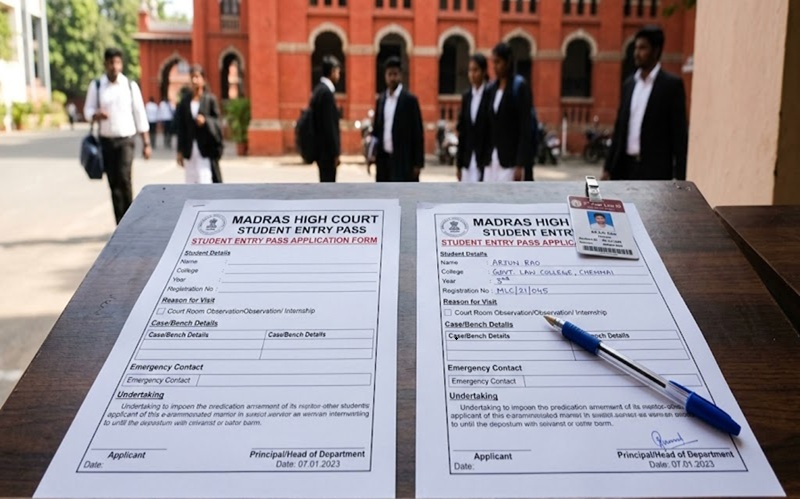
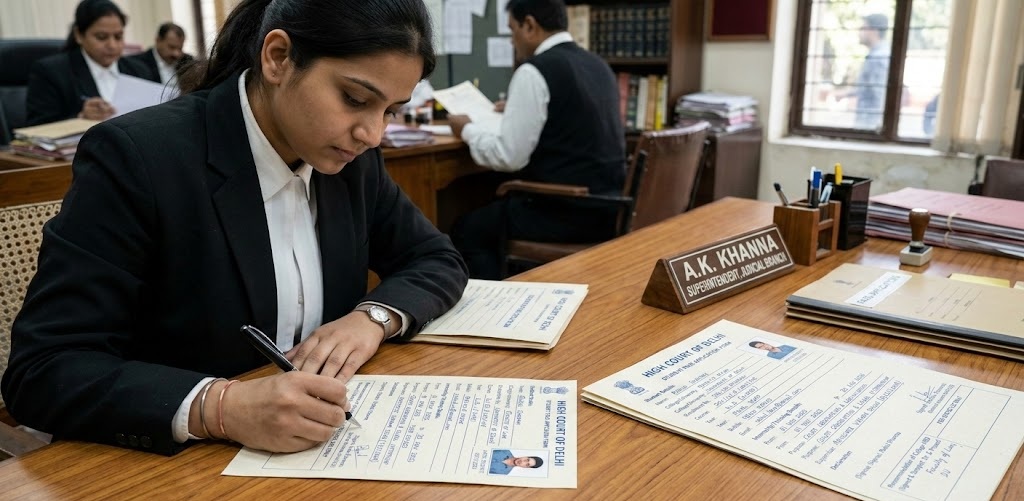
The Indian higher judiciary offers invaluable opportunities for law students to observe courtroom proceedings, understand judicial processes firsthand, and bridge the gap between academic legal education and practical advocacy. Central to accessing these opportunities is the High Court student pass system—a structured administrative mechanism that regulates law student entry into court premises while maintaining the security and dignity of judicial institutions. This comprehensive guide examines the student pass forms, application procedures, and associated protocols across major Indian High Courts, with particular focus on the systems that enable law students to transform theoretical knowledge into professional competence.
Law student access to High Courts serves multiple educational objectives. It allows students to witness the application of procedural laws, observe advocacy techniques employed by practicing lawyers, understand judicial reasoning in real-time, and develop professional networks that prove essential for career development. Recognizing these educational benefits, High Court administrations have established formal channels through which students can obtain regular, authorized access to court premises. These channels are governed by specific forms, eligibility criteria, and compliance requirements that ensure security while facilitating educational objectives.
The student pass system operates within the broader framework of court security protocols, which have intensified significantly across Indian judicial institutions in recent years. The deployment of the Central Industrial Security Force (CISF) at major High Courts, including Madras High Court since 2016, has necessitated more rigorous access control mechanisms
Student pass forms thus serve dual functions: they verify student credentials and institutional affiliations while providing security agencies with necessary information for background verification and access monitoring.
The Architecture of Student Pass Systems
Categories of Student Access
High Court student pass systems typically distinguish between different modes of student engagement with the court, each requiring specific documentation and approval processes. The primary categories include observation passes for students seeking to attend hearings, internship passes for those undertaking structured programs under judicial officers, and research passes for academic projects requiring extended court access.
Observation passes represent the most common category, designed for students who wish to attend court proceedings on a periodic basis. These passes typically offer daily or limited-duration entry and require minimal documentation beyond proof of institutional enrollment. The Madras High Court e-Visitor Pass system includes a specific category for “Law Student” under its visitor classification, allowing students to generate passes online for observation purposes
These passes are distinct from the monthly passes available to regular practitioners, reflecting the intermittent nature of student observation.
Internship passes constitute a more structured category, governing students who have secured formal internship positions with specific judges or court departments. The Allahabad High Court Internship Program exemplifies this category, requiring detailed application forms, academic records, and prior internship experience for eligibility
These passes are typically tied to the internship duration and may include additional privileges such as access to library facilities or research materials, subject to the supervising judge’s authorization.
Research passes address the needs of students undertaking academic projects that require systematic court observation or access to case records. These passes involve the most rigorous scrutiny, often requiring project proposals, faculty supervision commitments, and extended validity periods. The application forms for research passes demand comprehensive information about the research objectives, methodology, and expected outcomes to ensure that court access serves legitimate academic purposes.
Integration with Broader Court Security Frameworks
Student pass forms do not operate in isolation but integrate with comprehensive security management systems that govern all court access. The Madras High Court’s implementation of an e-Visitor Pass system in January 2023 exemplifies this integration, replacing manual processes with digital platforms that connect student applications to centralized security databases
. This digitalization enables real-time verification of student credentials, cross-referencing against watchlists, and generation of machine-readable passes that streamline entry procedures.
The security framework imposes specific requirements on student pass applications that extend beyond academic verification. Applicants must provide government-issued identification details, contact information for communication and emergency purposes, and declarations regarding the purpose and duration of their court access. The forms typically include undertakings regarding compliance with court rules, maintenance of decorum, and acceptance of security screening procedures.
For High Courts under CISF protection, student pass forms serve as inputs to the force’s access control protocols. The CISF maintains independent verification mechanisms that may include background checks for extended-duration passes or access to sensitive areas. Student applicants must therefore anticipate processing periods that accommodate these security procedures, applying well in advance of their intended court engagement dates.
Detailed Examination of Student Pass Forms
The Madras High Court Monthly Pass Form for Law Students
The Madras High Court provides a specific application form titled “Application for Issuance of Monthly Pass to Law Students,” available through its official forms repository
This form represents a structured approach to regular student access, distinguishing between students in three-year and five-year law degree programs through designated checkboxes or classification fields.
The form requires comprehensive personal information including the applicant’s full name, father’s or spouse’s name, date of birth, gender, and complete residential address
Educational details encompass the name of the law college or university, the specific year of study (with separate categories for 3/5-year program students), and academic qualifications. Contact information includes mobile number and email address, essential for pass delivery and emergency communication.
A critical component of the Madras High Court form is the requirement for a recommending advocate or senior advocate who vouches for the student’s credentials and purpose
This recommendation mechanism serves multiple functions: it provides the court with a professional reference for the student, establishes a point of contact for any disciplinary issues, and integrates the student into the professional network of practicing lawyers. The form requires detailed information about the recommending advocate, including their name, enrollment number with the Bar Council, address, contact number, and email address.
The form mandates submission of a recent passport-sized color photograph, which is integrated into the pass for identification purposes
Applicants must also provide their identity proof details, typically Aadhaar number or other government-issued identification, with the requirement to present the original document during pass collection.
A significant legal component of the form is the undertaking section, where applicants declare that the information provided is true and accurate, and commit to abiding by all rules and regulations established by the Madras High Court regarding monthly pass usage
The recommending advocate similarly provides an undertaking regarding the accuracy of their recommendation and their willingness to assume responsibility for the student’s conduct during court access.
Comparative Form Structures: Allahabad High Court Internship Application
The Allahabad High Court Internship Program for Law Students operates through a distinct application structure that reflects its specific programmatic objectives
. Unlike the Madras monthly pass form, which focuses on general observation access, the Allahabad form is designed to select candidates for structured internship experiences under the supervision of specific judges.
Eligibility criteria for the Allahabad program are rigorous and detailed in the application guidelines rather than the form itself. Applicants must be enrolled in recognized five-year or three-year law degree programs, with specific year-of-study requirements: fourth or fifth year for five-year program students, or second or third year for three-year program students
. The program also accepts students who have completed their sixth semester (for five-year courses) or first year (for three-year courses) final examinations, subject to satisfactory academic records.
The Allahabad application requires submission of multiple documents that demonstrate academic achievement and prior professional exposure. These include marksheets for all semesters or terms completed, a forwarding letter from the institution’s Head of Department, Dean, Director, or Registrar specifying the proposed internship period and area of interest, certificates of previous internships of at least 30 days or four weeks each, and current student identity cards
This documentation requirement reflects the program’s emphasis on students who have already developed foundational practical skills through prior internships.
The application process is exclusively online, with a unique Application ID generated upon successful submission for tracking purposes
Shortlisted candidates undergo interviews conducted through video conferencing, with final selections communicated approximately one month before the internship commencement date. This structured selection process contrasts with the more open access model of the Madras monthly pass system.
Supreme Court of India Student Access Procedures
The Supreme Court of India operates the SuSwagatam portal, a digital ePass system that accommodates law students among various visitor categories
The registration process for students involves creating a profile with personal details, address information, and category selection as “Law/Clerk/Intern.” The system requires upload of identity proof and a captured photograph through the portal interface.
The Supreme Court system distinguishes between different access needs through its category selection mechanism. Students must select appropriate roles that determine the authorizing authority for their ePass requests and the types of visits permitted
For extended access exceeding one week, the system requires Police Clearance Certificates, reflecting heightened security protocols at the apex court level.
The SuSwagatam portal emphasizes digital proficiency, requiring applicants to have smartphones or laptops with camera functionality and internet connectivity
This technical requirement may present barriers for students from institutions with limited technological resources, though the system represents the direction of travel for judicial access management across India.
High Court Student Pass Forms for Law Students
Application Procedures and Compliance Requirements
Documentation Standards and Verification Protocols
High Court student pass forms uniformly require specific categories of documentation that establish identity, institutional affiliation, and academic standing. Identity verification typically relies on government-issued documents such as Aadhaar cards, PAN cards, passports, driving licenses, or voter identification cards. The forms require both document numbers for database entry and physical presentation of originals for visual verification.
Institutional affiliation is established through student identity cards issued by recognized law colleges or universities, combined with bonafide certificates or forwarding letters from institutional authorities
These documents must be current, with expired cards or certificates generally not accepted. The requirement for institutional endorsement ensures that court access is limited to students in good academic standing and legitimate enrollment status.
Academic documentation requirements vary by pass type. For general observation passes, current enrollment may suffice. For internship programs, comprehensive academic records including marksheets for all completed semesters demonstrate the applicant’s scholarly engagement and qualification for advanced practical training
Research passes may require additional documentation such as project proposals, faculty recommendation letters, and statements of research methodology.
Photograph specifications are standardized across forms, typically requiring recent passport-sized color photographs with plain backgrounds
Digital application systems may have specific file format, size, and dimension requirements that applicants must meet for successful upload. Physical form submissions require photographs to be affixed in designated spaces, often with glue rather than staples to prevent damage during processing.
Submission Channels and Processing Timelines
The transition from paper-based to digital submission systems has significantly altered application procedures for High Court student passes. The Madras High Court enables online application for monthly passes through its e-services portal, though the specific form for law students may still require physical submission or hybrid processing
The Allahabad High Court has moved to exclusively online internship applications, reflecting broader trends in judicial administration digitalization
Processing timelines vary based on pass category and court administrative capacity. Daily or short-term observation passes may be generated instantaneously through automated systems once identity verification is complete. Monthly passes require administrative review and security verification, typically processing within several working days to two weeks. Internship applications involve competitive selection processes with longer timelines, requiring applications to be submitted three months prior to proposed commencement dates
Applicants must factor these timelines into their academic planning, recognizing that court access cannot be secured instantaneously. Early application is particularly critical for internship programs with fixed commencement dates and limited positions. The Allahabad High Court explicitly states that applications should be submitted three months in advance, with shortlisted candidates notified approximately one month before internship start dates
Collection Procedures and Pass Usage
Upon approval, student passes are distributed through designated collection points, typically the High Court Registry or Security Office. Applicants must present original identification documents and acknowledgment receipts to collect their passes. Some courts may require personal appearance for photograph verification, while others enable authorized representatives to collect passes on behalf of students.
Pass usage is governed by specific conditions that vary by category. Monthly passes for law students typically permit multiple entries during the validity period, though single-entry restrictions may apply to certain pass types
Internship passes are tied to specific chambers or judges, with access limited to areas necessary for the internship duties. All passes require presentation at entry gates, often with additional identity verification by CISF or court security personnel.
Students must understand that passes are non-transferable and intended solely for the named applicant. Lending passes to classmates or using passes for purposes other than stated in the application constitutes violations that may result in pass cancellation and future access denial. The undertaking sections of pass forms explicitly warn of consequences for misrepresentation or misuse, emphasizing the seriousness with which courts view access control.
Practical Challenges and Strategic Approaches
Common Application Difficulties
Law students frequently encounter practical challenges when navigating High Court pass application systems. Technical difficulties with online portals, including server downtime, slow response during peak periods, and browser compatibility issues, can frustrate application attempts
Document upload failures due to file size restrictions, format incompatibilities, or network interruptions require persistence and technical troubleshooting.
Information asymmetry presents another significant challenge. Many students lack clear guidance on which pass category suits their needs, the specific documentation required for their circumstances, or the appropriate timelines for application submission. Courts do not always provide comprehensive user guides, leaving students to navigate complex administrative processes through trial and error or peer advice.
Verification delays can disrupt academic schedules, particularly when students plan court visits to coincide with specific case hearings or academic deadlines. Security verification procedures, while essential, may extend processing timelines beyond student expectations. The requirement for Police Clearance Certificates for extended Supreme Court access adds additional procedural layers that students must navigate
Strategic Recommendations for Successful Applications
Successful navigation of student pass systems requires strategic planning and attention to procedural detail. Students should initiate the application process well in advance of their intended court engagement, building in buffer time for potential delays or documentation corrections. For internship programs with competitive selection, early preparation of comprehensive application packages is essential.
Documentation preparation should begin with verification of all identification and institutional documents for currency and accuracy. Students should ensure that their institutional identification cards are updated, bonafide certificates are recently issued, and academic records are complete. Photographs should be taken specifically for the application to meet recency requirements, rather than relying on older images.
Technical preparation for online applications includes testing browser compatibility, ensuring stable internet connectivity, and preparing documents in specified formats and sizes. Students should save application reference numbers and confirmation screenshots for tracking purposes. Multiple backup copies of submitted documents facilitate reapplication if technical failures occur.
Relationship building with practicing advocates can facilitate the recommendation requirements of monthly pass applications. Students should approach senior lawyers or faculty with court connections well in advance of application deadlines, providing them with comprehensive information about their academic background and purpose for court access to enable meaningful recommendations.
Institutional Perspectives and Educational Value
High Court Rationale for Student Access Programs
High Court administrations maintain student access programs based on recognition of their educational value and contribution to the legal profession’s development. Observation and internship programs cultivate future advocates familiar with specific court procedures, build institutional relationships with law schools, and demonstrate judicial commitment to transparency and public education.
The Allahabad High Court Internship Program explicitly states its objective of offering “one non-remunerative Internship” to suitable applicants for minimum terms of four weeks, extendable based on performance
. This structured approach reflects the court’s investment in training future practitioners who may eventually practice before the court, contributing to the quality of advocacy and judicial efficiency.
Security considerations remain paramount in institutional decision-making regarding student access. The forms and procedures reflect careful balancing of educational objectives against the need to protect judicial integrity, prevent disruptions, and ensure the safety of judges, staff, and visitors. The requirement for institutional endorsements, professional recommendations, and identity verification demonstrates courts’ risk management strategies.
Educational Outcomes and Professional Development
For law students, High Court access through formal pass systems offers transformative educational experiences that complement classroom instruction. Direct observation of constitutional and appellate advocacy exposes students to sophisticated legal arguments, procedural maneuvers, and judicial questioning techniques that textbooks cannot replicate. Internship experiences under judges provide insights into judicial reasoning, research methodologies, and the administrative dimensions of justice delivery.
The structured nature of formal pass systems, with their application requirements and compliance conditions, also provides professional socialization. Students learn to navigate bureaucratic institutions, maintain professional documentation, and adhere to codes of conduct—skills essential for successful legal practice. The recommendation and verification processes integrate students into professional networks that may prove valuable for career advancement.
Research opportunities enabled by extended access passes allow students to contribute to legal scholarship through empirical study of judicial processes, case law analysis, and procedural evaluation. These research experiences develop analytical capabilities and may produce publishable work that enhances academic credentials and professional visibility.
Future Directions and Systemic Evolution
Digital Transformation Trends
The ongoing digitalization of High Court administration promises continued evolution of student pass systems. The Madras High Court’s implementation of comprehensive e-Visitor Pass infrastructure suggests future directions, with potential for mobile application-based pass generation, biometric integration, and artificial intelligence-assisted verification
. These technologies may streamline application processes while enhancing security capabilities.
Integration between different High Court systems could enable interoperable student credentials, allowing students from national law universities to access multiple High Courts through unified authentication systems. Such integration would facilitate comparative study of judicial practices across jurisdictions and reduce administrative burden for students undertaking multi-court research projects.
Blockchain technology applications may enhance the security and authenticity of student passes, preventing forgery and enabling instant verification across distributed networks. Smart contracts could automate pass issuance upon verification of academic credentials, reducing administrative processing times and human error in application review.
Inclusive Access Considerations
As student pass systems evolve, attention to inclusive access remains essential. Digital application requirements may disadvantage students from institutions with limited technological infrastructure or individuals with disabilities affecting digital interaction. Courts must maintain alternative application channels—whether assisted digital services, telephone applications, or paper-based forms—to ensure that technological advancement does not create new barriers to educational opportunity.
Language accessibility also requires attention, as many student pass forms and portals operate primarily in English despite the linguistic diversity of India’s law student population. Multilingual interfaces and form versions would enhance accessibility for students from regional language backgrounds, aligning with constitutional commitments to linguistic diversity and equal opportunity.
Financial considerations affect student access, as internship programs are typically non-remunerative and may require students to bear travel, accommodation, and living expenses
Courts might consider stipend programs or partnerships with law schools to support economically disadvantaged students, ensuring that court access opportunities do not reinforce socioeconomic inequalities in the legal profession.
High Court Student Pass Forms for Law Students
Final Conclusion
High Court student pass forms represent more than administrative formalities; they constitute gateways to professional formation and educational enrichment for India’s future lawyers. The structured application processes, documentation requirements, and compliance conditions embedded in these forms reflect careful institutional balancing of educational objectives against security imperatives and administrative efficiency.
For law students, mastery of pass application procedures is an essential professional skill that opens doors to observation, internship, and research opportunities unavailable through academic study alone. Understanding the specific requirements of different High Court systems, preparing comprehensive documentation, and navigating digital and physical submission channels are competencies that parallel the procedural knowledge required for legal practice.
As India’s judicial institutions continue their digital transformation, student pass systems will evolve in ways that may enhance accessibility or create new challenges. Students and educational institutions must remain engaged with these developments, advocating for inclusive, efficient systems that serve the legal profession’s educational needs while maintaining the dignity and security of the judiciary.
The investment of time and effort in securing High Court access through proper channels yields returns in professional knowledge, skills, and relationships that endure throughout legal careers. Student pass forms, properly understood and strategically navigated, thus become instruments of professional advancement and contribute to the cultivation of a competent, ethically grounded legal profession for India’s democratic future.
Note: Madras High Court uses a hybrid system with both online e-Visitor passes for daily visitors and physical application forms for monthly student passes
.
Other High Courts (Manual/Physical Process)
For High Courts not listed above, entry passes are typically obtained through:
Advance Application: Apply at least 2-3 days before your intended visit for daily passes; 1-2 weeks for monthly passes
Required Documents: Keep ready:
Government ID (Aadhaar/PAN/Passport/Voter ID/Driving License)
Student ID card (for law students)
Passport-size photograph
Mobile number for OTP
For Law Students: Many High Courts require:
Bonafide certificate from institution
Recommendation from practicing advocate
Proof of enrollment in 3-year or 5-year law program
CISF Security: All High Courts under CISF protection require strict ID verification at entry gates—carry original documents
Technical Issues: If portals are down, contact the respective High Court Registry directly or visit in person for manual passes
Helpline/Contact Information
Institution
Contact Method
Details
Supreme Court SuSwagatam
Portal Support
Through website contact form
Madras High Court
Registry Phone
044-2532-0000 (General)
Delhi High Court
e-Services Help
Through website contact
Allahabad High Court
Registry
0532-2623000 (Allahabad), 0522-2623000 (Lucknow)
Note: Always verify current contact details on official websites before calling, as numbers may change.
Frequently Asked Questions (FAQ)
Q: What is the difference between a daily visitor pass and a monthly student pass for High Courts?
A: Daily visitor passes are generated for specific dates through online e-Visitor systems and are typically valid for single-day entry for observation purposes. Monthly student passes require formal application with institutional documentation and recommendations, offering extended validity (usually one month) for regular court access. Monthly passes involve more rigorous verification but provide convenience for students undertaking intensive observation or internship activities
Q: Can I apply for a High Court student pass in my first year of law school?
A: Eligibility varies by court and pass type. For general observation passes, first-year students may apply with valid institutional identification. However, structured internship programs like the Allahabad High Court Internship typically require students to be in their second or third year (for three-year programs) or fourth or fifth year (for five-year programs), or to have completed specific semesters
Check specific court requirements for your intended pass category.
Q: Do I need a recommending advocate to apply for a student pass?
A: For monthly passes at courts like Madras High Court, a recommending advocate or senior advocate is mandatory . The recommendation provides professional vouching for the student’s credentials and purpose. For daily observation passes or certain internship programs, institutional forwarding letters from faculty may suffice. Verify specific requirements in the application form for your target court.
Q: How long does it take to process a student pass application?
A: Processing timelines vary by pass type and court. Daily e-Visitor passes may be generated instantly upon online application. Monthly passes typically require 3-7 working days for verification and issuance. Internship programs involve competitive selection with longer timelines—the Allahabad High Court requires applications three months in advance and notifies selected candidates one month before commencement. Apply early to accommodate processing periods.
Q: What documents are universally required for High Court student pass applications?
A: Common requirements across courts include: (1) government-issued photo identification (Aadhaar, PAN, passport, driving license, or voter ID); (2) current institutional student identity card; (3) bonafide certificate or forwarding letter from law school; (4) recent passport-sized photographs; and (5) academic records (marksheets) for internship applications
Specific forms may require additional documentation such as recommendation letters or research proposals.
Q: Can I use a High Court student pass from one court to access another High Court?
A: No. Each High Court maintains independent pass systems, and passes are not transferable between jurisdictions. A Madras High Court monthly pass is valid only at Madras High Court premises; accessing Delhi High Court or Allahabad High Court requires separate applications to those institutions. Plan accordingly if your academic activities involve multiple High Courts.
Q: What should I do if my student pass application is rejected?
A: Review the rejection reason carefully—common issues include incomplete documentation, ineligible year of study, or security concerns. Rectify identified deficiencies and reapply if the issue is correctable. For internship program rejections, inquire whether reapplication is permitted for future terms. Maintain communication with your institution’s placement cell or faculty advisors, who may advocate on your behalf or suggest alternative courts or timing for application.
Q: Are there any fees for obtaining High Court student passes?
A: Most observation and monthly student passes are issued without fees as part of courts’ educational outreach. However, some specialized programs or extended research passes may involve nominal processing fees. Internship programs are typically non-remunerative, meaning students are not paid for their participation and must bear their own expenses for travel, accommodation, and meals
Verify current fee structures on official court websites.
Q: What dress code and behavior standards apply to student pass holders?
A: High Courts enforce formal dress codes and behavioral standards for all entrants, including students. The Allahabad High Court Internship Program specifies dress code requirements matching those for Research Associates: black trousers with white shirt and black coat with black neck tie and black shoes for men; white salwar suit with black blazer and black footwear for women
Students must maintain dignity, decorum, and discipline, avoiding mobile phone use during proceedings and refraining from loitering in premises.
Q: Can international students or foreign nationals apply for High Court student passes?
A: Yes, foreign law students may apply using passport identification, though additional verification procedures may apply. Extended access may require clearance from relevant ministries or court administration. For short-term observation, standard e-Visitor pass procedures typically suffice. Contact the specific High Court’s Registry for guidance on international student applications, as requirements may vary by jurisdiction and current security protocols.
This article provides general information about High Court student pass application procedures based on publicly available sources and typical administrative practices across Indian judicial institutions. Specific forms, requirements, and procedures are subject to change at the discretion of individual High Court administrations. Applicants must consult official High Court websites and directly verify current requirements before submitting applications.
The information presented does not constitute legal advice or guarantee application success. High Courts reserve the right to modify pass categories, eligibility criteria, and processing procedures without prior notice. The author and publisher disclaim liability for any inaccuracies, changes in procedure, or adverse outcomes resulting from reliance on this information. For definitive guidance on student pass applications, contact the Registry of the specific High Court where you seek access, or consult your law institution’s placement and internship coordination office.