
U.S. Court of Appeals for the First Circuit
Federal Justice in New England and Puerto Rico
The U.S. Court of Appeals for the First Circuit stands as one of the most important judicial institutions serving the northeastern United States and Puerto Rico. Whether you’re a resident of Maine, Massachusetts, New Hampshire, Puerto Rico, or Rhode Island seeking justice after an unfavorable federal district court decision, understanding how to navigate this appellate court is absolutely critical to protecting your legal rights.
This comprehensive guide walks you through every aspect of filing a case in the First Circuit from understanding jurisdiction to selecting the right appellate attorney, from electronic filing procedures to understanding what types of cases this court actually hears. Unlike generic legal resources, this article provides location-specific details, practical step-by-step instructions, and essential contact information that residents of this circuit actually need when facing the daunting prospect of a federal appeal.
Chapter 1: What Is the U.S. Court of Appeals for the First Circuit?
Geographic Scope and Judicial Authority
The First Circuit is one of thirteen federal appellate courts in the United States, established to review decisions from federal district courts within its territorial boundaries. The court’s jurisdiction encompasses:
-
Maine (District of Maine)
-
Massachusetts (District of Massachusetts)
-
New Hampshire (District of New Hampshire)
-
Puerto Rico (District of Puerto Rico)
-
Rhode Island (District of Rhode Island)
Important Note: While the First Circuit covers these specific areas, bankruptcy appellate panels and certain specialized administrative appeals may follow different procedural paths.
Court Structure and Composition
The First Circuit maintains its headquarters at the John Joseph Moakley United States Courthouse located at 1 Courthouse Way, Suite 2500, Boston, Massachusetts 02210. The court currently operates with six active circuit judges and several senior judges who continue to hear cases on a reduced schedule.
Chief Judge: The chief judge position rotates among the active judges based on seniority and serves administrative and procedural leadership functions within the circuit.
The Role of Appellate Courts in the American Legal System
Unlike trial courts where evidence is presented and witnesses testify, appellate courts function as error-correcting institutions. The First Circuit does not:
-
Hear new evidence
-
Accept witness testimony
-
Conduct trials
-
Reconsider factual findings unless clearly erroneous
Instead, the court reviews the legal record from the district court proceedings to determine whether significant legal errors occurred that affected the outcome of the case.
Chapter 2: Understanding First Circuit Jurisdiction Can You Actually File Here?
Mandatory vs. Discretionary Jurisdiction
Mandatory Jurisdiction (Appeals by Right): Most cases falling within the First Circuit’s scope must be heard by the court. These include:
-
Final judgments from federal district courts within the circuit
-
Certain interlocutory orders specified by statute
-
Bankruptcy court appeals (in specific circumstances)
-
Administrative agency decisions appealed to federal court
Discretionary Jurisdiction (Petition for Permission): Some matters require the court’s permission to proceed:
-
Interlocutory appeals under 28 U.S.C. § 1292(b)
-
Appeals from magistrate judge decisions (when not consented to)
-
Petitions for writs of mandamus or prohibition
Types of Cases the First Circuit Hears
Civil Appeals
The majority of First Circuit docket consists of civil appeals, including:
Commercial and Contract Disputes:
-
Breach of contract cases involving federal questions
-
Securities fraud and investment disputes
-
Antitrust and unfair competition claims
-
Intellectual property infringement cases (patent, trademark, copyright)
Constitutional Claims:
-
First Amendment free speech and religion cases
-
Fourth Amendment search and seizure challenges
-
Fifth Amendment due process and takings claims
-
Fourteenth Amendment equal protection cases
-
Second Amendment firearm regulation challenges
Employment and Labor Law:
-
Discrimination claims under Title VII, ADEA, ADA
-
Whistleblower protection appeals
-
ERISA benefit disputes
-
Fair Labor Standards Act violations
Civil Rights Actions:
-
42 U.S.C. § 1983 claims against state actors
-
Police misconduct and excessive force cases
-
Prisoner civil rights petitions
-
Voting rights disputes
Criminal Appeals
Government Appeals:
-
Sentencing guideline departures and enhancements
-
Suppression order reversals (limited circumstances)
-
Post-conviction relief denials
Defendant Appeals:
-
Conviction challenges based on constitutional violations
-
Sentencing appeals (reasonableness challenges)
-
Evidentiary ruling errors
-
Jury instruction mistakes
-
Ineffective assistance of counsel claims
Bankruptcy Appeals
The First Circuit has specialized procedures for bankruptcy appeals, which may be heard by:
-
The Bankruptcy Appellate Panel (BAP) for the First Circuit
-
The district court (if parties elect)
-
Direct appeal to the circuit court in specific circumstances
Administrative and Regulatory Appeals
-
Social Security disability benefit denials
-
Immigration and naturalization decisions
-
Environmental Protection Agency rulings
-
Federal Communications Commission orders
-
Labor Relations Board determinations
Cases the First Circuit CANNOT Hear
Understanding jurisdictional limits prevents wasting time and resources:
-
State court decisions: These must be appealed through state appellate systems
-
Final judgments from other circuits: You must appeal to the circuit covering that geographic area
-
Purely state law claims: Unless there’s a federal question or diversity jurisdiction basis
-
Cases not yet decided by lower courts: Generally, you cannot appeal until a final judgment enters
Chapter 3: Pre-Filing Essentials Critical Steps Before You Appeal
Step 1: Determine Finality of the Lower Court Decision
The Final Judgment Rule (28 U.S.C. § 1291) requires that only final decisions of district courts are immediately appealable. A final judgment typically:
-
Ends the litigation on the merits
-
Leaves nothing for the district court to do but execute the judgment
-
Disposes of all claims among all parties
Exceptions to Finality:
-
Collateral Order Doctrine: Certain interlocutory orders conclusively determining important rights separable from merits may be immediately appealed
-
28 U.S.C. § 1292(a): Interlocutory orders granting, continuing, modifying, or refusing injunctions
-
28 U.S.C. § 1292(b): Certification by district judge for immediate appeal of controlling question of law
Step 2: Calculate Your Deadline—The 30-Day Rule
Critical Deadline: Notice of appeal must be filed within 30 days after entry of the judgment or order appealed from.
Key Points:
-
The clock starts running when the clerk enters the judgment on the docket, not when the decision is announced orally
-
If the United States or its agency/officer is a party, they have 60 days to appeal
-
Federal Rule of Appellate Procedure 4(a)(5) allows for limited extensions upon showing excusable neglect or good cause, but these are disfavored
Practical Tip: Never wait until the last week. Court closures, technical failures, or procedural confusion can destroy your appeal rights permanently.
Step 3: Determine Standing and Appellate Capacity
You must have standing to appeal, meaning:
-
You were a party to the district court proceeding (or are a successor in interest)
-
You were directly and adversely affected by the judgment
-
You have a personal stake in the outcome
Appellate Capacity Issues:
-
Minors must proceed through guardians or representatives
-
Corporations must be represented by counsel (cannot proceed pro se in federal appellate courts, except for specific circumstances)
-
Prisoners have specific procedures under the Prison Litigation Reform Act
Step 4: Obtain and Review the Trial Court Record
Before filing, you must understand what the appellate court will review:
The Record on Appeal Includes:
-
The pleadings filed in district court
-
Transcripts of all proceedings (if transcribed)
-
Exhibits admitted into evidence
-
Docket entries and minute orders
-
Findings of fact and conclusions of law
-
The judgment or order being appealed
Ordering Transcripts: Contact the court reporter who recorded the proceedings immediately. Transcript preparation can take weeks or months, and you cannot perfect your appeal without the transcript in most cases.
Cost Consideration: Real-time transcription services can cost $5-$10 per page. A lengthy trial may generate thousands of pages. Plan accordingly or seek in forma pauperis status if eligible.
Step 5: Consider Settlement and Mediation Options
The First Circuit offers mediation programs that can resolve appeals without full briefing and argument:
First Circuit Mediation Program:
-
Voluntary confidential mediation available
-
Conducted by experienced circuit mediators
-
Can occur while briefing schedule proceeds
-
Often successful in resolving civil appeals, particularly employment and contract disputes
Contact the mediation office early in the process if settlement is a possibility.
Chapter 4: The Electronic Filing System (CM/ECF) Modern Appellate Practice
Understanding CM/ECF in the First Circuit
The Case Management/Electronic Case Files (CM/ECF) system is the mandatory electronic filing platform for the First Circuit. Paper filing is permitted only in specific, limited circumstances.
Registration Requirements
Attorneys:
-
Must register for CM/ECF access through the court’s website
-
Required to file electronically in all cases
-
Responsible for maintaining current contact information
Self-Represented Litigants (Pro Se):
-
May register for electronic filing but are not required to do so
-
May file in paper format, though electronic filing is encouraged
-
Must comply with specific formatting requirements for paper submissions
Technical Requirements and File Specifications
Acceptable File Formats:
-
PDF (Portable Document Format) is the standard for all documents
-
Hyperlinks within PDFs are permitted and encouraged for case citations
-
Audio and video files must meet specific technical specifications when relevant to the appeal
Formatting Standards:
-
8.5 x 11 inch page size
-
Margins: at least one inch on all sides
-
Font: 14-point proportional font or 12-point monospaced font (Courier)
-
Line spacing: Double-spaced for text, single-spaced for footnotes and quotations over 50 words
-
Page limits strictly enforced (see Chapter 5)
Filing Procedures Step-by-Step
1. Log into CM/ECF: Access the system through the First Circuit’s website using your PACER login credentials.
2. Select Case or Initiate New Appeal:
-
For new appeals: Select “Appellate” and “Opening Case”
-
For existing cases: Search by case number
3. Upload Documents:
-
Ensure PDFs are text-searchable (not scanned images unless necessary)
-
Verify file sizes comply with system limits (typically 50MB per document)
-
Use descriptive docket text entries
4. Pay Fees or Request Waiver:
-
$505.00 filing fee for civil appeals (as of 2024—verify current amount)
-
Fee waivers available for qualified pro se litigants through in forma pauperis application
5. Confirm Filing:
-
System generates NEF (Notice of Electronic Filing)
-
Immediate timestamp proves timely filing
-
Service on other parties occurs automatically through CM/ECF
Common Electronic Filing Errors to Avoid
-
Missing Signatures: PDF must include typed signature block with “/s/ Name” format
-
Incorrect Event Selection: Choosing wrong docket entry type can require refiling
-
Oversized Files: Split large appendices into multiple volumes
-
Non-Searchable PDFs: Scanned documents without OCR make the record unusable
-
Deadline Confusion: Filing at 11:59 PM on deadline day risks technical failure disasters
Chapter 5: Drafting and Filing the Notice of Appeal
The Notice of Appeal—Your Ticket to the First Circuit
The Notice of Appeal is a simple yet critical document that triggers the appellate court’s jurisdiction. Errors here can be fatal to your case.
Required Contents
Under Federal Rule of Appellate Procedure 3, the notice must specify:
-
The party or parties taking the appeal
-
The judgment, order, or part thereof being appealed
-
The court to which the appeal is taken (U.S. Court of Appeals for the First Circuit)
Sample Notice of Appeal Language
NOTICE OF APPEAL

Notice is hereby given that [Plaintiff/Defendant/Appellant Name],
hereby appeals to the United States Court of Appeals for the First Circuit from the final
judgment entered in this action on [Date], as reflected in the docket entry at [Docket Number].

[Name]
[Address]
[Telephone]
[Email]
[Attorney Registration Number, if applicable]

Dated: [Date]
Designating the Record on Appeal
Simultaneously with or shortly after filing the notice, you must designate the items to be included in the record:
Form Required: Use the First Circuit’s specific forms available on the court website
Contents:
-
List of transcript proceedings to be prepared
-
List of exhibits to be included
-
Statement regarding stipulations with opposing party on record contents
Filing Fees and Financial Considerations
Current Filing Fee: $505.00 for civil appeals (subject to change—always verify)
Additional Costs:
-
Transcript preparation ($5-$10 per page)
-
Printing and binding appendices
-
Attorney fees (if represented)
-
Travel expenses for oral argument (if granted)
In Forma Pauperis (IFP) Status:
-
File Motion to Proceed In Forma Pauperis with affidavit of financial status
-
If granted, filing fee waived and transcript costs paid by court
-
Prisoners have specific procedures under 28 U.S.C. § 1915
Chapter 6: Appellate Briefing—The Heart of Your Appeal
Briefing Schedule and Deadlines
After the notice of appeal and record preparation, the court issues a briefing schedule order:
Typical Timeline:
-
Appellant’s Opening Brief: Due 40 days after record is filed
-
Appellee’s Response Brief: Due 30 days after opening brief
-
Appellant’s Reply Brief: Due 14 days after response brief (optional but recommended)
Extensions: Available through motion for good cause, but appellate courts are less generous than trial courts with deadline extensions.
The Opening Brief—Your Opportunity to Persuade
Page Limits:
-
Principal Briefs: 14,000 words or 50 pages (whichever is greater, but word count preferred)
-
Reply Briefs: 7,000 words or 25 pages
-
Type-Volume Certificates required certifying compliance
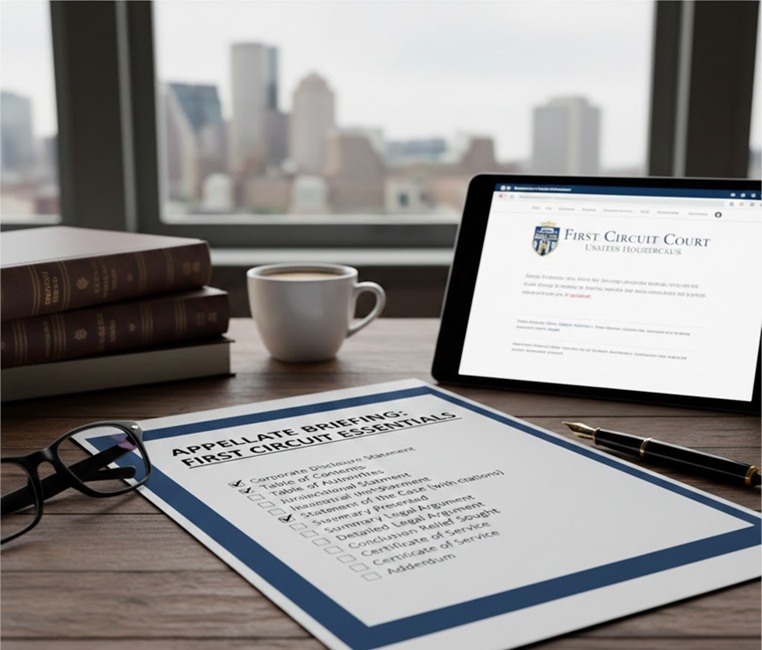
Required Sections:
-
Corporate Disclosure Statement: If appellant is a corporation, identify parent companies and publicly held subsidiaries
-
Table of Contents: With page references
-
Table of Authorities: Alphabetically arranged cases, statutes, rules, regulations
-
Statement of Jurisdiction: Basis for appellate jurisdiction with citations
-
Statement of Issues Presented for Review: Concise questions presented
-
Statement of the Case: Procedural history and facts (with record citations)
-
Summary of Argument: Overview of legal position
-
Argument: Detailed legal analysis with proper headings
-
Conclusion: Specific relief sought
-
Certificate of Compliance: Word count and type-volume verification
-
Certificate of Service: Proof of service on all parties
-
Addendum: Relevant statutes, rules, regulations, and essential documents
Standards of Review—The Lens Through Which the Court Evaluates Your Case
Understanding the applicable standard of review is crucial:
De Novo Review: (No deference to trial court)
-
Pure questions of law
-
Constitutional interpretations
-
Statutory construction
Clearly Erroneous Standard: (Significant deference)
-
Findings of fact by district judge
-
Credibility determinations
Abuse of Discretion: (Broad deference)
-
Evidentiary rulings
-
Procedural decisions
-
Sentencing determinations (reasonableness review)
Substantial Evidence: (For administrative appeals)
-
Review of agency fact-finding
Writing Effective Appellate Arguments
What Works in the First Circuit:
-
Direct, clear prose avoiding hyperbole
-
Accurate record citations on every factual assertion
-
Recognition of unfavorable precedent with distinguishing arguments
-
Respectful tone toward opposing counsel and lower court
-
Focus on legal error, not re-litigating facts
Common Mistakes:
-
“Argumentative” Statements of Fact: Using fact section to argue rather than present neutrally
-
Overlooked Precedent: Failing to address controlling First Circuit cases
-
Improper Record Citations: Assertions without specific transcript or document references
-
Excessive Length: Repetitive arguments that annoy rather than persuade
Chapter 7: Oral Argument—Facing the Panel
When Oral Argument Occurs
The First Circuit hears oral argument in approximately 30-40% of cases. Many appeals are decided on the briefs alone.
Requesting Oral Argument:
-
Both parties may request oral argument in their briefs
-
Court may order argument sua sponte even if parties waive
-
If granted, typically scheduled 3-6 months after briefing completion
Preparing for the Panel
Typical Panel Composition:
-
Three circuit judges (randomly assigned)
-
Occasionally includes visiting judges from other circuits or district courts
Argument Format:
-
Appellant: 15 minutes (may reserve time for rebuttal)
-
Appellee: 15 minutes
-
Rebuttal: Reserved time from appellant’s allocation (typically 3-5 minutes)
Location:
-
John Joseph Moakley Courthouse, Boston (most cases)
-
Occasionally Puerto Rico for cases originating there
-
Remote argument available in specific circumstances (post-pandemic protocols)
Effective Oral Advocacy Techniques
Preparation Essentials:
-
Master the record—judges will ask specific questions about testimony
-
Know controlling precedent cold, including case numbers and years
-
Prepare 2-minute “elevator pitch” version of your argument
-
Anticipate difficult questions and practice answers
-
Bring clean copy of brief and joint appendix
During Argument:
-
Address the court respectfully (“May it please the court,” “Your Honor”)
-
Answer questions directly before returning to your outline
-
Admit weaknesses if necessary, then explain why you still prevail
-
Never read from prepared text—conversation, not oration
-
Watch the clock—bailiff will signal remaining time
Chapter 8: Post-Decision Procedures and Further Review
Types of Dispositions
Published Opinions: (Precedential)
-
Create binding precedent within the circuit
-
Published in Federal Reporter series
-
Full legal analysis and reasoning
Unpublished Dispositions: (Non-Precedential)
-
Do not create binding precedent
-
Typically shorter, fact-specific
-
May not be cited as precedent (per First Circuit Local Rule 36.0)
Summary Orders:
-
Brief affirmances without full opinion
-
Common in criminal and straightforward civil appeals
Petition for Rehearing
If you disagree with the panel’s decision:
Options:
-
Petition for Rehearing by the Panel: Ask same three judges to reconsider (rarely granted)
-
Petition for Rehearing En Banc: Ask full court to hear case (extraordinary remedy, granted in <1% of cases)
Deadline: 14 days from entry of judgment (or 45 days if United States is party)
Grounds: Typically limited to arguments of exceptional importance or panel’s misunderstanding of case/law
Petition for Certiorari to the Supreme Court
The losing party may seek review by the U.S. Supreme Court:
Procedure:
-
File Petition for Writ of Certiorari within 90 days of judgment
-
Pay $300 filing fee or proceed IFP
-
Brief in opposition required if government or significant party responds
Likelihood of Grant: The Supreme Court hears approximately 1-2% of cases filed, typically those involving:
-
Circuit splits on important federal questions
-
Constitutional issues of national significance
-
Clear errors of grave magnitude
Chapter 9: Selecting the Right Appellate Attorney
Why Appellate Practice Requires Specialized Skills
Appellate litigation differs fundamentally from trial practice:
-
No Discovery: Appeals proceed on established record
-
Legal Focus: Emphasis on research, writing, and oral argument rather than witness examination
-
Procedural Rigor: Strict rules with little tolerance for error
-
Different Audience: Appellate judges vs. juries or trial judges
Types of Appellate Representation
Federal Appellate Specialists:
-
Former law clerks to First Circuit judges
-
Extensive experience in the circuit
-
Familiarity with specific judges’ preferences and precedents
General Litigation Firms:
-
May handle appeals as extension of trial representation
-
Advantage of deep case knowledge from trial level
-
Ensure they have dedicated appellate department
Public Interest and Legal Aid Organizations:
-
For specific case types (civil rights, immigration, criminal)
-
Often provide free or reduced-cost representation
-
Subject to capacity limitations
Finding Qualified First Circuit Appellate Counsel
Resources for Attorney Selection:
-
First Circuit Bar Association: Directory of members practicing in the circuit
-
Martindale-Hubbell and Avvo Ratings: Peer and client reviews
-
State Bar Associations: Maine, Massachusetts, New Hampshire, Puerto Rico, Rhode Island
-
Law School Clinics: Harvard, Boston College, Boston University, University of Maine, Suffolk University offer appellate clinics
-
Appellate Advocacy Organizations: Massachusetts Appellate Clinic, Puerto Rico Legal Services
Questions to Ask Potential Appellate Counsel
-
How many First Circuit appeals have you handled in the past five years?
-
Have you clerked for a First Circuit or other federal appellate judge?
-
What is your success rate in appeals (recognizing that appellate reversal rates are generally low)?
-
Will you handle the appeal personally or delegate to associates?
-
What is your fee structure (hourly vs. flat fee vs. contingency)?
-
Can you provide references from past appellate clients?
Cost Considerations and Fee Arrangements
Typical Fee Structures:
-
Hourly Rates: $300-$800+ per hour depending on experience and firm size
-
Flat Fees: Possible for straightforward appeals ($15,000-$75,000+ range)
-
Contingency: Rare in appeals, occasionally available in specific civil cases
-
Hybrid Arrangements: Reduced hourly plus success premium
Cost-Saving Strategies:
-
Limited scope representation (attorney handles specific aspects)
-
Consultation for pro se litigants (unbundled services)
-
Law school clinic assistance for eligible cases
Chapter 10: Special Procedures and Considerations
Criminal Appeals—Unique Aspects
Right to Counsel: Indigent defendants have constitutional right to counsel on direct appeal
First Circuit Criminal Justice Act (CJA) Panel:
-
Court-appointed attorneys for eligible defendants
-
Experienced criminal appellate practitioners
-
Separate fee structure from civil cases
Habeas Corpus Appeals:
-
Collateral attacks on convictions
-
Different procedural rules and standards
-
Often proceed pro se initially
Immigration Appeals
Board of Immigration Appeals (BIA) to First Circuit:
-
Petitions for review of removal orders
-
Extremely strict filing deadlines (often 30 days from final BIA order)
-
Automatic stay of removal upon filing (in some circumstances)
Key Considerations:
-
Jurisdictional bars for certain criminal convictions
-
Exhaustion of administrative remedies required
-
Factual findings reviewed under substantial evidence standard
Bankruptcy Appeals
First Circuit Bankruptcy Appellate Panel (BAP):
-
Three-judge panel specializing in bankruptcy
-
Located in Boston with occasional sessions in other circuit cities
-
Parties may elect district court review instead
Direct Circuit Appeals:
-
Available for final orders in core proceedings
-
Specific procedural rules apply
Class Action Appeals
Interlocutory Review: Class certification decisions may be immediately appealed under Rule 23(f)
Standard of Review: Abuse of discretion for certification decisions, de novo for legal conclusions
Chapter 11: Essential Resources and Contact Information
First Circuit Court Information
Clerk’s Office: John Joseph Moakley United States Courthouse
1 Courthouse Way, Suite 2500
Boston, MA 02210
1 Courthouse Way, Suite 2500
Boston, MA 02210
Main Phone: (617) 748-9057
Hours: Monday through Friday, 8:30 AM – 5:00 PM (Eastern Time)
Website: www.ca1.uscourts.gov
Electronic Filing Support: Available through court website CM/ECF help desk
PACER and Case Lookup
Public Access to Court Electronic Records:
-
Website: www.pacer.gov
-
Registration required
-
Fee: $0.10 per page (capped at $3.00 per document)
-
Free for audio of oral arguments
Legal Aid and Pro Bono Resources
Massachusetts:
-
Volunteer Lawyers Project: (617) 423-0648
-
Massachusetts Legal Assistance Corporation: www.mlac.org
Maine:
-
Pine Tree Legal Assistance: (207) 774-4753
-
Maine Volunteer Lawyers Project: (207) 774-8279
New Hampshire:
-
New Hampshire Legal Assistance: (603) 668-2900
-
Pro Bono Referral Program: (603) 715-3290
Rhode Island:
-
Rhode Island Legal Services: (401) 274-2652
-
Volunteer Lawyer Program: (401) 458-3276
Puerto Rico:
-
Legal Services of Puerto Rico: (787) 772-1200
-
Puerto Rico Bar Association Pro Bono: (787) 721-3358
Law School Appellate Clinics
Harvard Law School: Appellate Litigation Clinic
Boston College Law School: Appellate Advocacy Clinic
Boston University School of Law: Civil Litigation & Justice Clinic
Suffolk University Law School: Appellate Advocacy Program
University of Maine School of Law: Cumberland Legal Aid Clinic
University of Puerto Rico School of Law: Clinical Programs
Boston College Law School: Appellate Advocacy Clinic
Boston University School of Law: Civil Litigation & Justice Clinic
Suffolk University Law School: Appellate Advocacy Program
University of Maine School of Law: Cumberland Legal Aid Clinic
University of Puerto Rico School of Law: Clinical Programs
Professional Associations
First Circuit Bar Association:
Website: www.firstcircuitbar.org
Provides networking, CLE programs, and mentorship for practitioners in the circuit
Website: www.firstcircuitbar.org
Provides networking, CLE programs, and mentorship for practitioners in the circuit
Federal Bar Association:
Massachusetts Chapter, Puerto Rico Chapter, and others provide appellate practice resources
Massachusetts Chapter, Puerto Rico Chapter, and others provide appellate practice resources
Frequently Asked Questions (FAQ)
Q: Can I represent myself (pro se) in the First Circuit?
A: Yes, non-prisoner litigants may proceed pro se, though it is strongly discouraged given the complexity of appellate procedure. Corporations and other artificial entities must be represented by counsel. Prisoners have specific limitations under the Prison Litigation Reform Act.
A: Yes, non-prisoner litigants may proceed pro se, though it is strongly discouraged given the complexity of appellate procedure. Corporations and other artificial entities must be represented by counsel. Prisoners have specific limitations under the Prison Litigation Reform Act.
Q: How long does a First Circuit appeal take?
A: From notice of appeal to final decision typically ranges from 12 to 24 months, depending on case complexity, briefing schedules, and oral argument scheduling. Expedited review is available in specific circumstances (emergency motions).
A: From notice of appeal to final decision typically ranges from 12 to 24 months, depending on case complexity, briefing schedules, and oral argument scheduling. Expedited review is available in specific circumstances (emergency motions).
Q: What are my chances of winning on appeal?
A: Nationwide, appellate reversal rates generally range from 10-25% depending on case type. Criminal appeals have lower reversal rates than civil appeals. The quality of legal error preserved at trial and the skill of appellate counsel significantly impact outcomes.
A: Nationwide, appellate reversal rates generally range from 10-25% depending on case type. Criminal appeals have lower reversal rates than civil appeals. The quality of legal error preserved at trial and the skill of appellate counsel significantly impact outcomes.
Q: Can I introduce new evidence on appeal?
A: Generally, no. Appeals are limited to the record established in the district court. New evidence is only considered in extraordinary circumstances through procedures like remand for evidentiary hearings or motions to supplement the record.
A: Generally, no. Appeals are limited to the record established in the district court. New evidence is only considered in extraordinary circumstances through procedures like remand for evidentiary hearings or motions to supplement the record.
Q: What if I can’t afford the filing fee?
A: File a Motion to Proceed In Forma Pauperis with supporting affidavit of financial status. If granted, the filing fee is waived and transcript costs may be covered by the court. Prisoners have specific procedures under 28 U.S.C. § 1915.
A: File a Motion to Proceed In Forma Pauperis with supporting affidavit of financial status. If granted, the filing fee is waived and transcript costs may be covered by the court. Prisoners have specific procedures under 28 U.S.C. § 1915.
Q: Do I need a lawyer to file a notice of appeal?
A: No, but missing the deadline or failing to properly designate the judgment being appealed can forfeit your appeal rights permanently. The notice of appeal is deceptively simple but critically important.
A: No, but missing the deadline or failing to properly designate the judgment being appealed can forfeit your appeal rights permanently. The notice of appeal is deceptively simple but critically important.
Q: Can I appeal a state court decision to the First Circuit?
A: No. The First Circuit only hears appeals from federal district courts within its geographic boundaries. State court appeals must proceed through the state appellate court system (Massachusetts Appeals Court, Maine Supreme Judicial Court, etc.).
A: No. The First Circuit only hears appeals from federal district courts within its geographic boundaries. State court appeals must proceed through the state appellate court system (Massachusetts Appeals Court, Maine Supreme Judicial Court, etc.).
Q: What is the difference between a published and unpublished opinion?
A: Published opinions create binding precedent and are printed in the Federal Reporter. Unpublished dispositions are not precedential and generally cannot be cited in subsequent cases per First Circuit Local Rule 36.0.
A: Published opinions create binding precedent and are printed in the Federal Reporter. Unpublished dispositions are not precedential and generally cannot be cited in subsequent cases per First Circuit Local Rule 36.0.
Q: How do I find out which judges will hear my appeal?
A: The panel is randomly assigned shortly before oral argument or, if no argument, before decision. The clerk’s office announces the panel composition when the case is calendared for argument or submission.
A: The panel is randomly assigned shortly before oral argument or, if no argument, before decision. The clerk’s office announces the panel composition when the case is calendared for argument or submission.
Q: Can I settle my case while the appeal is pending?
A: Yes. The First Circuit mediation program facilitates settlement discussions, and parties may file stipulated dismissals at any time. Many appeals settle during the briefing process.
A: Yes. The First Circuit mediation program facilitates settlement discussions, and parties may file stipulated dismissals at any time. Many appeals settle during the briefing process.
For More information Visit Home Click Here
Important Disclaimer
This article provides general legal information and educational guidance regarding the U.S. Court of Appeals for the First Circuit. It does not constitute legal advice, nor does it create an attorney-client relationship. Federal appellate procedure is complex and unforgiving of errors. Deadlines are jurisdictional and strictly enforced.
If you are considering an appeal, consult with a qualified attorney licensed to practice in the First Circuit immediately. Do not rely solely on this article or any general resource for decisions affecting your legal rights. Court rules, fees, and procedures change periodically—always verify current requirements through the official First Circuit website (www.ca1.uscourts.gov) or by contacting the Clerk’s Office directly.
The author and publisher disclaim any liability for actions taken or not taken based on the contents of this guide. Every case is unique, and specific legal advice from competent counsel is essential to protect your appellate rights.
This comprehensive guide was prepared to assist individuals and attorneys navigating the federal appellate system in Maine, Massachusetts, New Hampshire, Puerto Rico, and Rhode Island. For the most current information, always consult official court resources and qualified legal counsel.